
What's Happening?
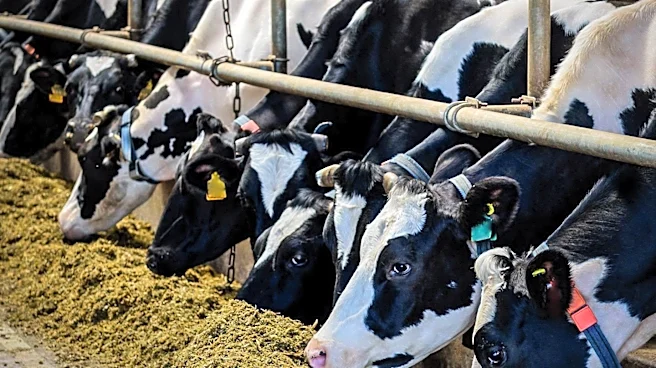
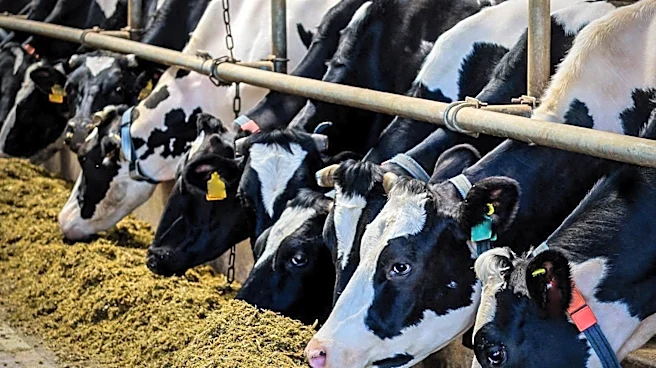
The beef industry is increasingly adopting a 'beef-on-dairy' production model, where dairy cows are bred with beef bulls to produce calves for meat. This practice has seen explosive growth, with beef-on-dairy calf
production increasing from 50,000 head in 2014 to 3.22 million in 2024, now accounting for an estimated 26% of the feedlot population. This shift is partly a response to a historic cattle shortage, exacerbated by drought, which has pushed beef prices to record highs. Large operations like Blackshirt Feeders in western Nebraska, which can house up to 200,000 cattle, primarily raise beef-on-dairy calves. Critics, including Bill Bullard, CEO of R-CALF USA, argue that this model threatens the independence of U.S. ranchers and could lead to the vertical integration of the beef industry, similar to the pork and poultry sectors.
Why It's Important?
The rise of beef-on-dairy production poses a significant threat to the traditional U.S. ranching industry, which has seen a decline of roughly 4 in 10 ranches since 1978. This model allows meatpackers and large feedlots to bypass independent ranchers and live auctions, potentially giving them greater control over the supply chain. This could lead to a 'chickenization' of the beef industry, where meat companies own the animals and control every stage of production, leaving farmers with substantial debt and financial risk. For consumers, this means more beef may come from animals raised in confinement, with potential implications for animal welfare and the environmental impact of large-scale feedlots, such as increased water usage and manure generation. The shift also raises concerns about animal health, with research indicating that beef-on-dairy cattle are more prone to issues like congestive heart failure, lameness, and liver abscesses due to intensive genetic selection and high-grain diets.
What's Next?
The beef-on-dairy model is expected to continue its growth, with industry players like Cargill, Nestlé, Land O’Lakes, and ABS Global actively promoting and investing in its expansion. While some experts, like Tara Felix from Penn State, believe traditional ranching will remain the backbone of the industry due to biological limitations on dairy cow calf production, others anticipate a more integrated model where meatpackers or large feedlots gain greater control. The industry faces increasing scrutiny over animal welfare and environmental concerns associated with large-scale confinement operations. The long-term impact on the economic viability of independent ranchers and the structure of the U.S. beef supply chain remains a critical area of development. Policy discussions around antitrust enforcement and support for independent producers may intensify as the industry continues to evolve.
Beyond the Headlines
The expansion of beef-on-dairy production reflects a broader trend towards industrialization in agriculture, driven by efficiency and cost control. This shift has profound ethical implications regarding animal treatment, as beef-on-dairy calves often experience a life of confinement from birth, separated from their mothers and raised on grain-based diets. The public image of the beef industry, traditionally associated with open pastures and independent ranchers, could be significantly altered by the increasing prevalence of these industrial practices. Legally, the potential for vertical integration raises antitrust concerns, as it could further concentrate power among a few large meatpackers, potentially leading to reduced competition and unfair practices for smaller producers. Culturally, this transformation challenges the romanticized image of the American rancher, representing a fundamental change in how beef is produced and consumed in the U.S.