

What's Happening?
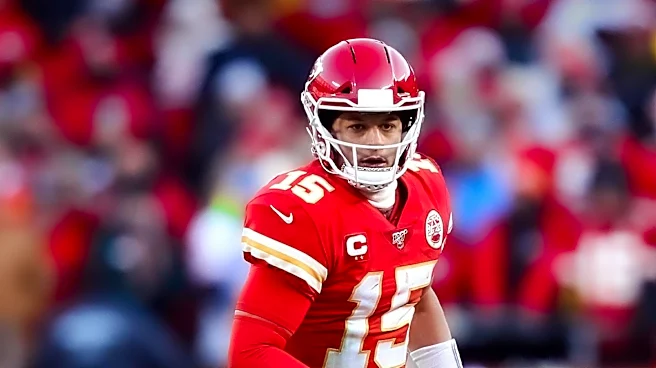
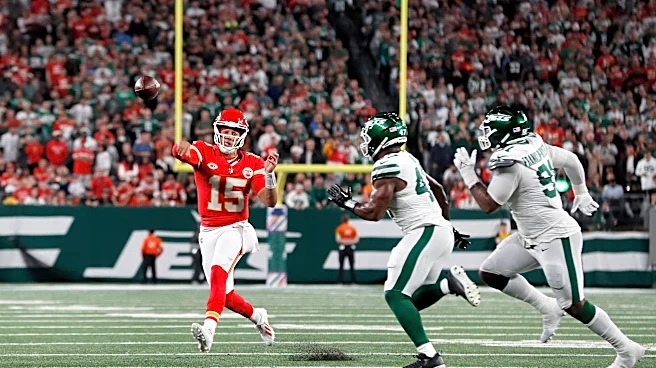
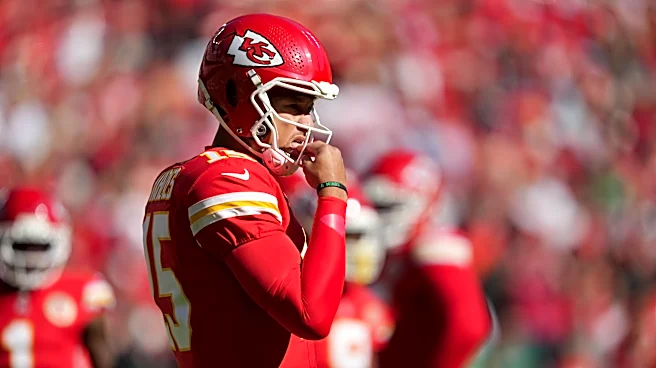
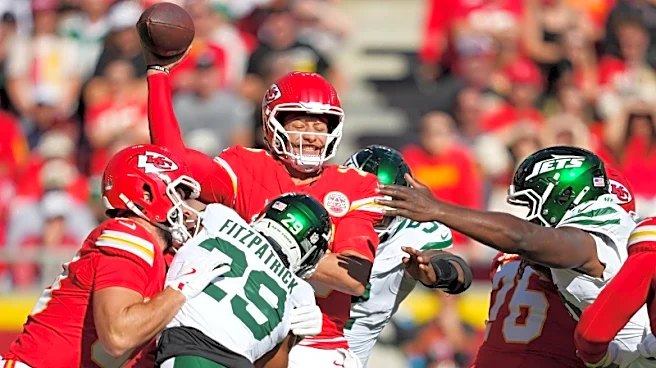
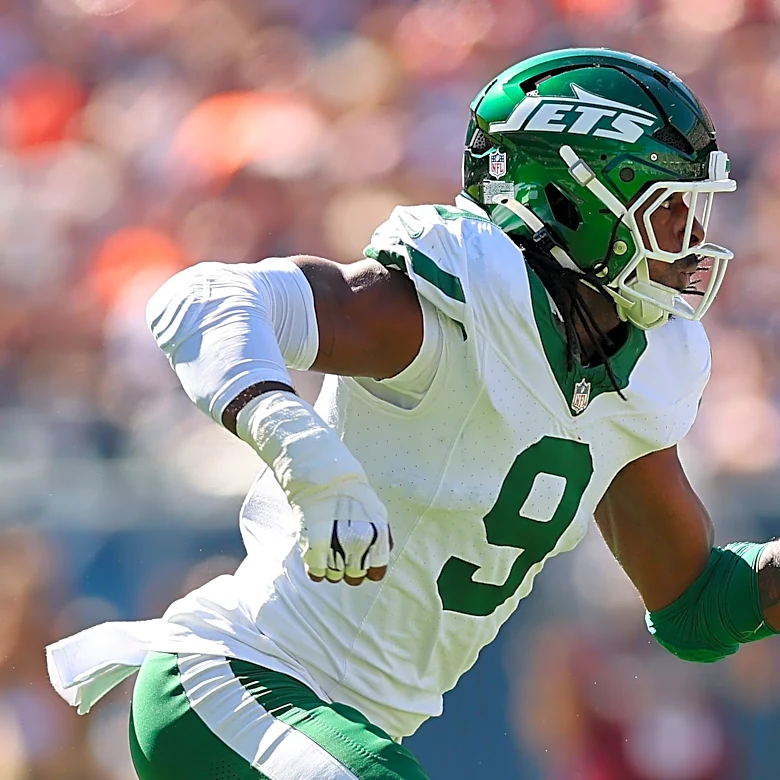
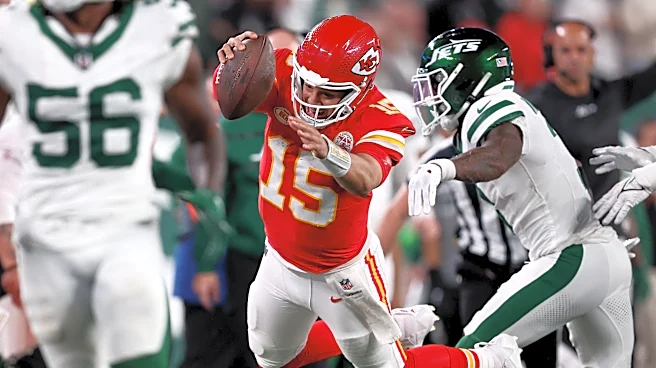
Kansas City Chiefs quarterback Patrick Mahomes will undergo additional tests on his right elbow following an injury sustained during Sunday's 35-12 victory over the New York Jets. Mahomes was hit on his throwing arm by Jets rookie David Bailey in the second
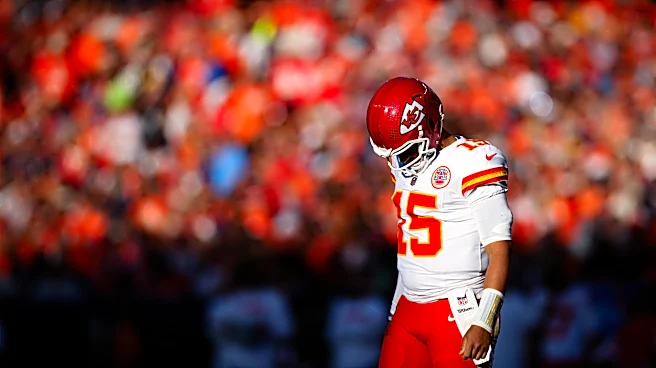
quarter, leading to a fumble and visible discomfort. Despite the apparent injury, Mahomes returned to the game without missing an offensive snap and continued to play, leading the Chiefs to 21 points in the third quarter. He completed 23 of 31 passes for 242 yards and two touchdowns. Post-game, Mahomes stated he was scared by the incident and didn't feel great, but emphasized his commitment to playing if able. He noted that he wasn't throwing as desired after halftime but felt better as the game progressed. Mahomes expressed belief that the injury was more muscle-related than ligament damage, a distinction he made after being able to throw the football.
Why It's Important?
The potential severity of Patrick Mahomes' elbow injury carries significant implications for the Kansas City Chiefs and the broader NFL landscape. As one of the league's most valuable players, any extended absence or diminished performance from Mahomes could drastically alter the Chiefs' Super Bowl aspirations. His ability to play through pain and still perform at a high level, as demonstrated against the Jets, underscores his importance to the team's success. For the Chiefs, a healthy Mahomes is crucial for maintaining their competitive edge in the AFC. For the NFL, the health of its star quarterbacks directly impacts viewership, team rivalries, and overall league narratives. The outcome of these further tests will be closely watched by fans, analysts, and fantasy football participants, as it could influence playoff predictions and betting lines for upcoming games.
What's Next?
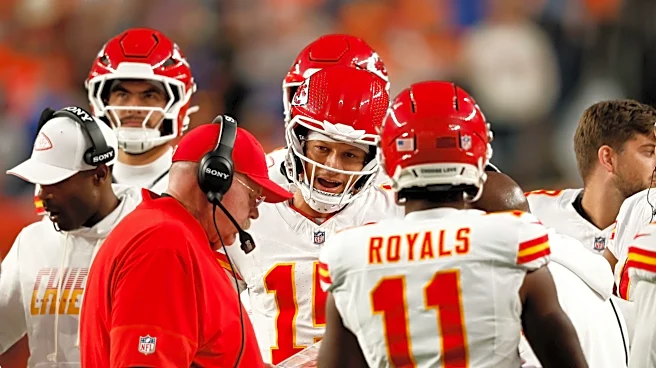
Patrick Mahomes is scheduled to undergo further medical tests on his right elbow to determine the full extent of the injury. While initial assessments suggest it might be a muscle-related issue rather than a more severe ligament tear, these tests will provide a definitive diagnosis. The Chiefs' coaching staff and medical team will closely monitor his condition throughout the week. Head coach Andy Reid indicated that Mahomes is expected to be sore, but no immediate long-term concerns have been publicly raised. Depending on the test results, Mahomes' practice participation and availability for the Chiefs' next game will be determined. The team will likely prioritize his long-term health, potentially adjusting his workload or even considering a temporary absence if the injury proves more significant than initially thought, to prevent further aggravation.
Beyond the Headlines
Mahomes' ability to return to the game and perform effectively after such a visible injury highlights the intense pressure and high pain tolerance often exhibited by elite athletes in professional sports. This incident also brings into focus the ongoing debate about player safety and the balance between competitive drive and long-term health. While Mahomes' determination is commendable, playing through injuries, especially to a throwing arm, carries inherent risks that could lead to more severe, chronic issues down the line. The Chiefs' medical staff will face the critical task of managing his recovery to ensure he can continue to perform at an elite level without jeopardizing his career. This situation also underscores the reliance many NFL teams have on a single star player, making their health a paramount concern for franchise stability and success.