


What's Happening?
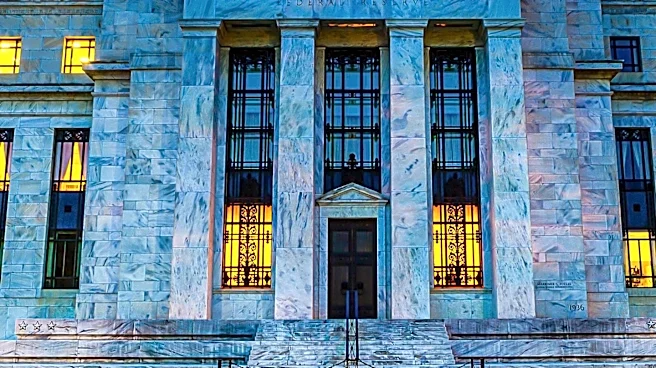
Beth Hammack, President of the Federal Reserve Bank of Cleveland, voted in favor of an interest rate increase during a recent Federal Reserve meeting. This decision aligns with a broader sentiment among some Fed officials who believe tighter monetary
policy is necessary. The vote occurred in the context of the Fed's September rate hike, the first since 2023, which left the key interest rate between 3.75% and 4.00%. While the Fed kept rates unchanged in late October, the minutes from that meeting indicated that some participants considered the pause a close call, with nearly all believing further tightening would likely be required. This stance from Hammack and others comes as the Deutsche Bank warns that investors may be underestimating the extent of future interest rate increases, drawing parallels to historical patterns where markets initially underestimated the scope of rate cycles.
Why It's Important?
The vote by Cleveland Fed President Beth Hammack for an interest rate hike underscores the Federal Reserve's ongoing commitment to combating inflation, even as market participants may be underestimating the potential for further increases. This hawkish stance from a regional Fed president signals that the central bank remains vigilant about price stability, which could lead to continued monetary tightening. For U.S. industries and economic stakeholders, higher interest rates typically translate to increased borrowing costs, potentially impacting corporate investment, consumer spending, and the housing market. Businesses with high debt loads or those reliant on future growth projections may face headwinds, while sectors like banking and insurance could potentially benefit from higher net interest margins. The Deutsche Bank's warning highlights a potential disconnect between market expectations and the Fed's likely trajectory, suggesting that investors who are not adequately prepared for further rate hikes could face unexpected portfolio adjustments.
What's Next?
The next significant indicator for the market will be the Federal Reserve's decision on December 9, 2026. This meeting will reveal whether the market's current expectations for rate adjustments are confirmed or if the warnings from institutions like Deutsche Bank regarding underestimated rate risks gain more traction. Should the Fed signal further tightening, it could prompt a re-evaluation of investment strategies across various asset classes, particularly in equities and fixed-income markets. Stakeholders, including businesses and individual investors, will closely monitor the Fed's communications for clues on the pace and magnitude of future rate adjustments. The ongoing debate within the Fed, as evidenced by President Hammack's vote, suggests that the central bank remains prepared to act decisively to bring inflation back to its target, potentially leading to continued volatility in financial markets.
Beyond the Headlines
The persistent debate within the Federal Reserve regarding interest rate policy, exemplified by President Hammack's vote for a hike, points to a deeper tension between managing inflation and supporting economic growth. This situation highlights the complex challenge central banks face in navigating an economic landscape where inflation remains above target while concerns about potential economic slowdowns persist. The historical pattern of markets underestimating the extent of rate cycles, as noted by Deutsche Bank, suggests a potential behavioral bias among investors. This could lead to significant market corrections if the Fed's actions diverge sharply from current market pricing. Furthermore, the differing impacts of higher rates on various sectors—benefiting some while challenging others—could exacerbate economic inequalities and shift capital allocation patterns, influencing long-term industrial development and regional economic performance across the U.S.