






What's Happening?
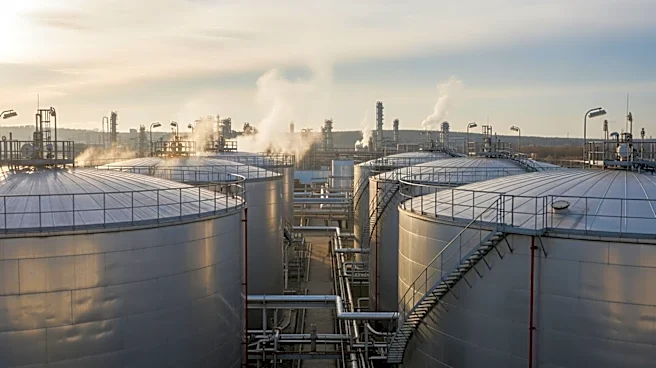
The oil market is experiencing a phase of uncertainty as it transitions from geopolitical concerns to fundamental supply and demand dynamics. Recent data shows a 6.1 million barrel decrease in U.S. crude inventories, suggesting a tightening market. However,
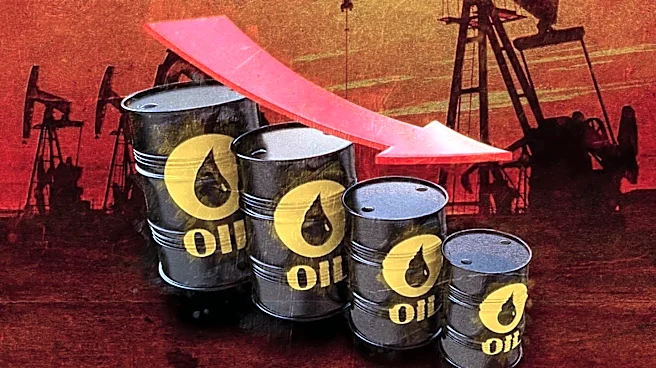
the market's reaction has been muted due to expectations of potential oversupply as disrupted barrels from the Strait of Hormuz gradually return. The market is now focused on future supply and demand balances, with U.S. production growth being cautious due to capital discipline and regulatory concerns. This shift in focus highlights the complexity of commodity markets, where future expectations often outweigh current conditions.
Why It's Important?
The current situation in the oil market has significant implications for global energy prices and economic stability. The potential for oversupply could lead to lower prices, affecting oil-dependent economies and industries. Conversely, tight inventories and geopolitical risks could drive prices higher, impacting consumer costs and inflation. The cautious approach of U.S. producers reflects a broader trend of prioritizing financial stability over aggressive growth, which could influence global supply dynamics. This period of uncertainty underscores the importance of strategic planning and risk management for stakeholders in the energy sector.
What's Next?
The oil market will continue to navigate between the bullish narrative of tight inventories and resilient demand, and the bearish outlook of potential oversupply and economic slowdown. Stakeholders will need to monitor geopolitical developments, production trends, and economic indicators to anticipate market movements. The outcome of this transition will shape energy policies, investment strategies, and market confidence in the coming months.