








What's Happening?
Sicona Battery Technologies, an Australian company specializing in next-generation battery materials, is investing $10.3 million to establish its first U.S. facility and headquarters in New Orleans East, Louisiana. This move follows Sicona's acquisition
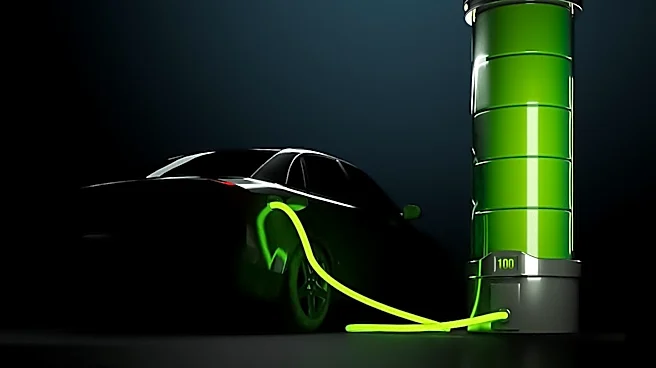
of ADVANO, a local battery materials company. The new facility, located at the New Orleans Regional Business Park (NORBP), will serve as a domestic manufacturing base for silicon-carbon anode materials used in lithium-ion batteries. Sicona plans to implement its SiCx® silicon-carbon anode production process and expand the operation into a 'Super Pilot' facility. This expansion aims to produce enough material for over 3 million battery cells, supporting various applications including AI data center battery backup systems, robotics, power tools, autonomous systems, drones, electric vertical takeoff and landing aircraft, and defense applications. The project is expected to create 32 direct new jobs with an average annual salary of $101,500, significantly above the average wage in Orleans Parish. Louisiana Economic Development estimates an additional 52 indirect new jobs, totaling 84 potential new job opportunities in the Southeast Region. Operations are anticipated to commence in mid-September.
Why It's Important?
This investment by Sicona marks a significant step in strengthening the U.S. domestic supply chain for advanced battery materials, particularly for lithium-ion batteries. By establishing a manufacturing base in Louisiana, Sicona will reduce reliance on overseas production, enhancing national security and economic resilience in critical technology sectors. The production of silicon-carbon anode materials is crucial for improving the energy density and charge/discharge rates of batteries, which are vital for the advancement of electric vehicles, defense applications, and various high-tech industries. The creation of high-wage jobs in New Orleans East contributes to local economic development and provides opportunities for a skilled workforce. Furthermore, this project positions Louisiana as a key player in the growing advanced manufacturing sector, attracting further investment and fostering innovation. The strategic importance of this facility extends to supporting the U.S. in achieving greater energy independence and technological leadership in battery technology.
What's Next?
Sicona's operations in New Orleans East are slated to begin in mid-September. The company is expected to participate in Louisiana's Industrial Tax Exemption and High Impact Jobs programs, which are part of a competitive incentives package offered by the state to secure the project. Louisiana Economic Development (LED) will continue to provide workforce development solutions through LED FastStart. The establishment of this facility is likely to attract further attention and investment in the region's advanced manufacturing and battery technology sectors. The success of Sicona's 'Super Pilot' facility could lead to future expansions and increased production capacity, further solidifying Louisiana's role in the national battery supply chain. Local and state officials will likely monitor the project's progress and its impact on job creation and economic growth, potentially using it as a model for attracting other global companies seeking to establish a U.S. presence.
Beyond the Headlines
Sicona's decision to establish its U.S. headquarters and manufacturing facility in New Orleans highlights a broader trend of global companies seeking to localize their supply chains and manufacturing capabilities within the United States. This move is not just about economic incentives but also reflects the strategic importance of having domestic production for critical technologies, especially in the context of geopolitical shifts and supply chain vulnerabilities. The acquisition of ADVANO by Sicona demonstrates how international companies are leveraging existing local expertise and infrastructure to gain a foothold in the U.S. market. This collaboration fosters a transfer of knowledge and technology, enhancing the overall innovation ecosystem in Louisiana. The focus on silicon-carbon anode technology also underscores the ongoing race to develop more efficient and powerful batteries, which will have profound implications for the future of transportation, energy storage, and defense capabilities. This development could also inspire educational institutions in Louisiana to tailor programs to meet the growing demand for skilled workers in advanced battery manufacturing.