


What's Happening?
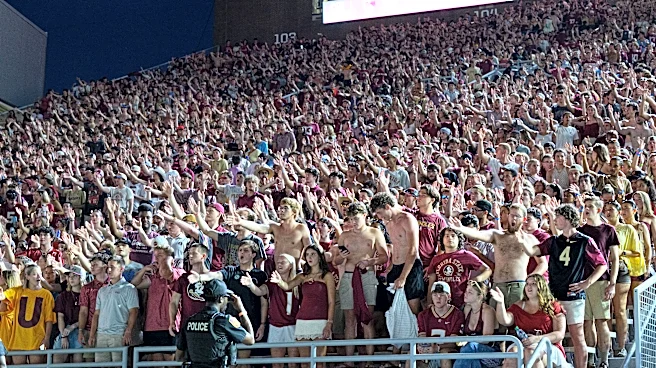
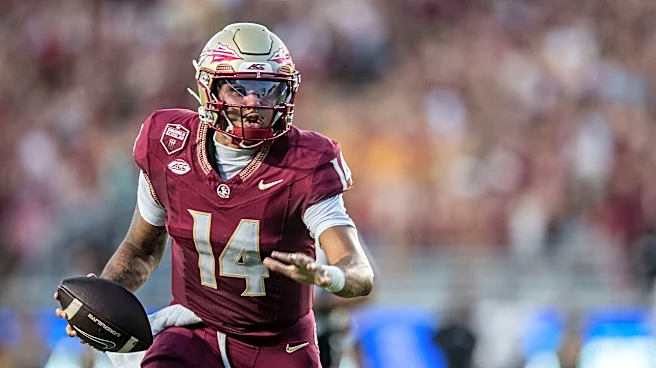
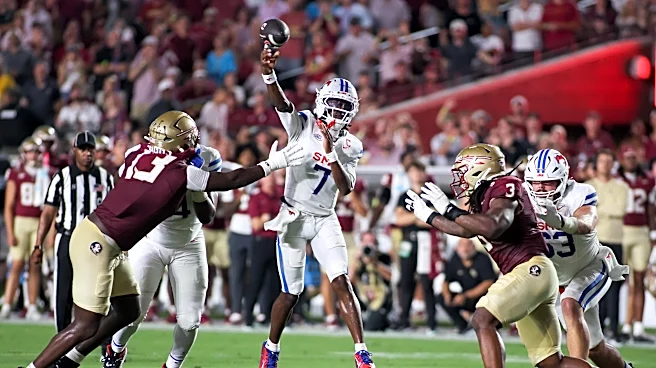
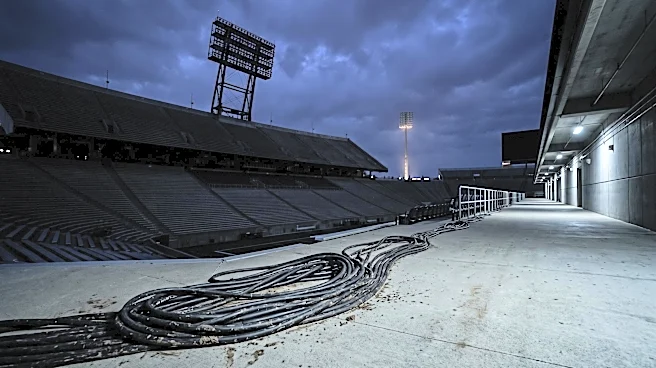
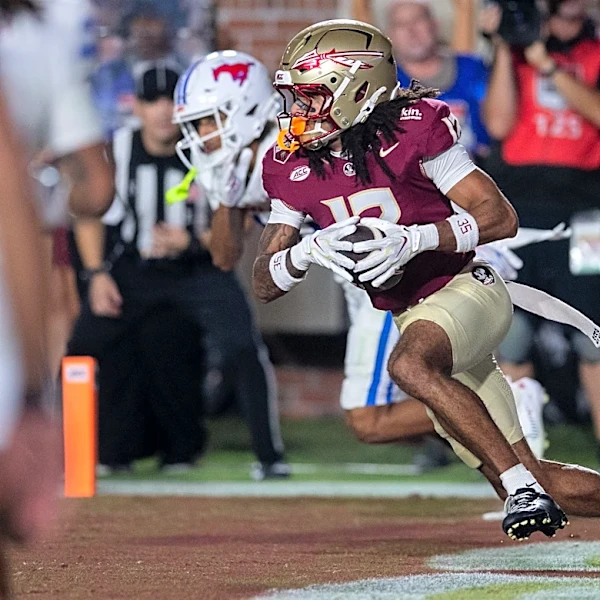
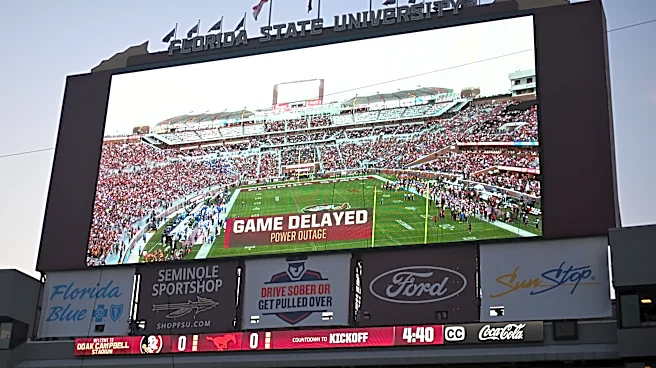
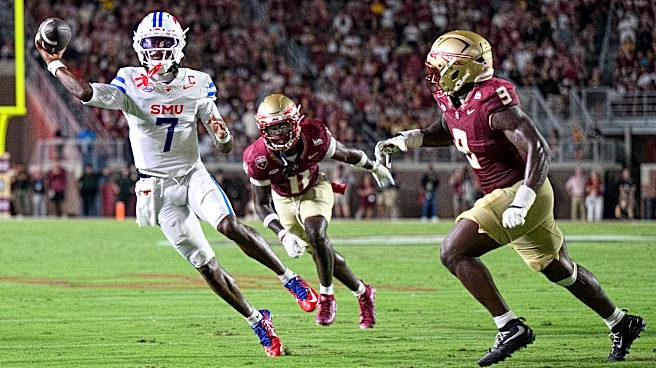
The college football game between Florida State and SMU, scheduled for Monday, September 7, was significantly delayed due to a power outage at Doak Campbell Stadium in Tallahassee, Florida. The game, initially set to kick off at 7:30 p.m. ET, did not
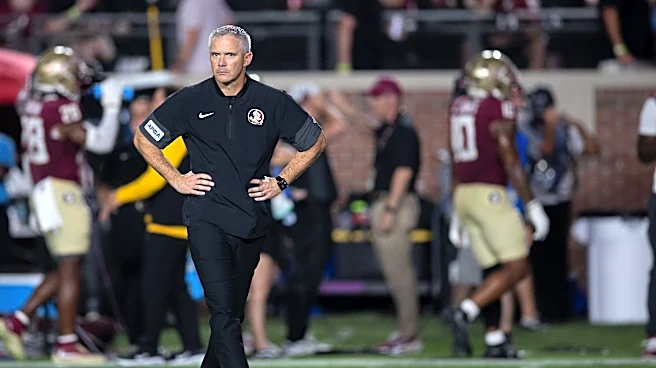
begin until 9:15 p.m. ET, an hour and 45 minutes later. The power went out just before the scheduled start, and attempts to reset a transformer resulted in it blowing. Despite a storm warning in effect for Tallahassee, the delay was attributed solely to the power issue, not weather. Officials worked to restore power, with some lights eventually turning on, though the press box side remained dark. SMU coach Rhett Lashlee expressed his frustration with the delay.
Why It's Important?
This power outage and subsequent delay highlight the logistical challenges and potential vulnerabilities in hosting large-scale sporting events. For Florida State University, the incident could raise questions about infrastructure reliability and emergency preparedness for future games. The lack of a scoreboard, PA announcer, and replay review during the game, as a result of the partial power restoration, significantly impacted the fan experience and the integrity of the game's officiating. Such disruptions can affect broadcast schedules, advertising revenue, and the overall perception of the host institution. For the teams involved, the extended delay can disrupt pre-game routines, impact player focus, and potentially influence game performance, especially for the visiting team.
What's Next?
Following the incident, Florida State University and stadium management will likely conduct a thorough review of the power infrastructure at Doak Campbell Stadium to prevent similar occurrences. This may involve assessing the condition of transformers, backup power systems, and emergency protocols. For the ACC commissioner and school presidents, who met during the delay, discussions may focus on establishing clearer guidelines for handling such disruptions in future games, including potential rescheduling options or minimum operational requirements for a game to proceed. Fans and broadcasters will expect assurances that such issues will be addressed to ensure a smooth and fully functional game-day experience moving forward.
Beyond the Headlines
Beyond the immediate inconvenience, this incident touches upon broader issues of infrastructure resilience in public venues. As sporting events become increasingly reliant on complex technological systems, the failure of basic utilities like power can have cascading effects. The decision to proceed with the game despite limitations, such as the absence of replay review, raises questions about fairness and competitive balance, particularly in high-stakes college football. It also underscores the pressure on event organizers to deliver a scheduled event, even under challenging circumstances, balancing safety, fan experience, and contractual obligations. The 'Hail Mary' effort to restore power reflects the significant financial and reputational stakes involved in college sports events.