







What's Happening?
The federal Worker Adjustment and Retraining Notification (WARN) Act requires certain employers to provide 60 days' advance written notice before a qualifying mass layoff or plant closing. This applies to employers with 100 or more full-time employees.
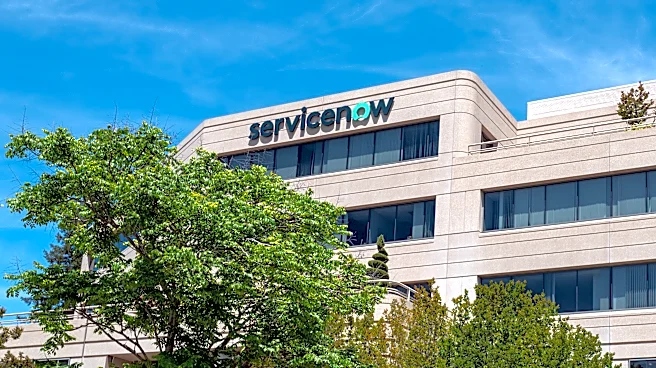
A plant closing is defined as affecting 50 or more full-time workers, while a mass layoff involves 50 or more workers at a single site if they constitute at least one-third of the workforce, or 500 or more workers regardless of percentage. The notice must be given to affected workers (or their union), the state dislocated worker unit, and the local government's chief elected official. Contrary to some perceptions, particularly in the tech industry, the WARN Act still applies, and companies are required to file these notices publicly. For instance, recent filings include ServiceNow for 37 workers in Santa Clara and 25 in San Diego, effective January 4, 2027, and Comcast for 634 workers in Philadelphia, effective December 31, 2026.
Why It's Important?
The WARN Act is crucial for providing affected workers with a critical 60-day window to prepare for unemployment. This notice period allows individuals to file for unemployment benefits, compare health coverage options like federal COBRA against marketplace plans, and actively seek new employment while still employed. This advance warning can significantly mitigate the financial, mental, and emotional distress associated with unexpected job loss. While the law does not guarantee severance, it provides invaluable time for workers to plan their next steps. The act also ensures transparency, as these notices are publicly filed, allowing for tracking of layoff trends and employer compliance. State-specific laws, such as California's Cal-WARN, often provide even stricter protections, covering smaller employers and lower thresholds for affected workers, further emphasizing the importance of these regulations in safeguarding employee welfare during economic shifts.
What's Next?
For workers receiving a WARN notice, the immediate next steps involve reviewing the notice for details such as the employer, site, number of affected workers, and expected layoff date. It is advisable to file for unemployment benefits early, as claims are processed through the state and can often be initiated before the last day of work. Workers should also evaluate their health coverage options, comparing federal COBRA with marketplace plans during this period. The 60-day window is intended to facilitate job searching while still employed, offering a strategic advantage in a competitive job market. Employers, on the other hand, must ensure strict compliance with both federal and state WARN Act requirements to avoid potential litigation for back pay and benefits, which can arise from late or missing notices.
Beyond the Headlines
The WARN Act highlights a fundamental tension between employer flexibility and employee security. While some argue that the act can be limiting for businesses, particularly smaller ones or those facing unforeseen circumstances, its existence underscores a societal recognition of the profound impact of mass layoffs on individuals and communities. The law's limitations, such as its inapplicability to small employers or its site-specific thresholds, reveal areas where workers might still be vulnerable. The distinction between at-will employment and WARN Act obligations also points to the complex legal landscape governing employment in the U.S. The ongoing debate about whether profitable companies should be penalized for mass layoffs, as suggested by some petitions, reflects a broader societal discussion about corporate responsibility and worker protections in an evolving economic environment.