







What's Happening?
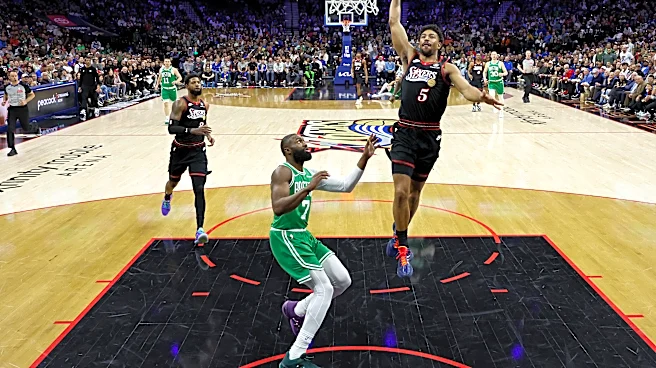
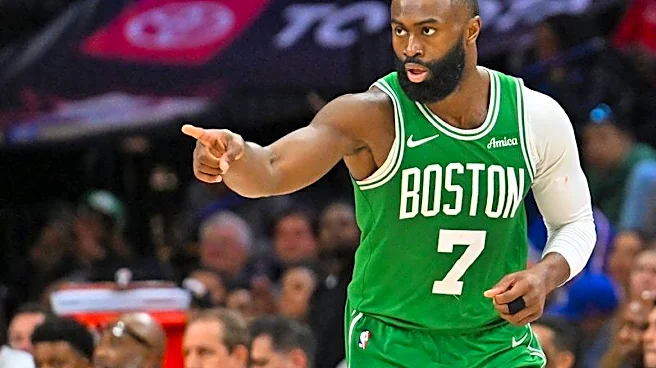
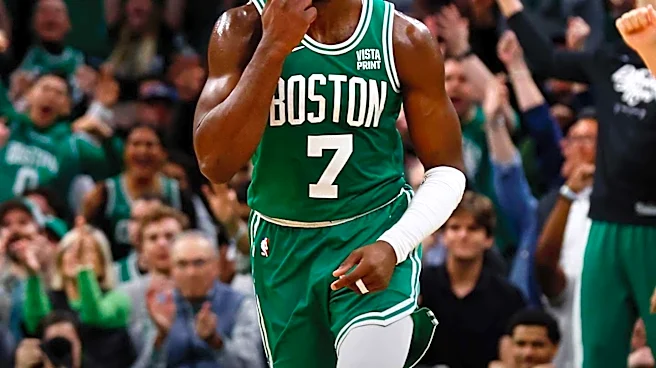
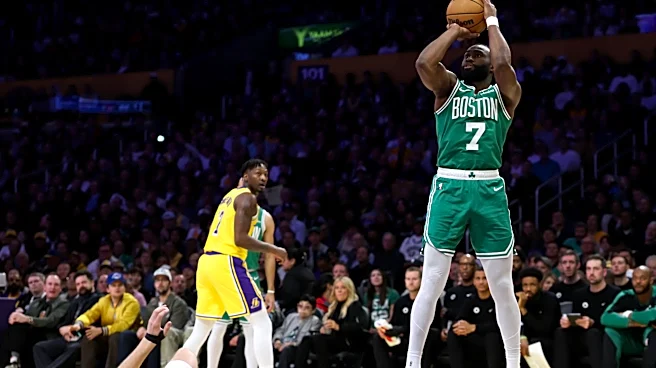
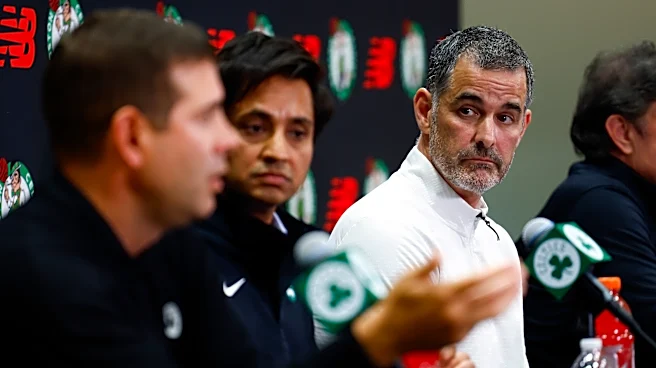
Boston Celtics president of basketball operations, Brad Stevens, has addressed the controversial decision to trade star player Jaylen Brown to the Philadelphia 76ers. The trade, which also involved acquiring Paul George and draft picks, was primarily
driven by salary cap considerations. Stevens explained that having a significant portion of the team's salary cap tied up in Brown and Jayson Tatum made it challenging to maintain a competitive roster. Despite Brown's impressive performance in the 2025-26 season, the move was seen as necessary to provide the team with more flexibility. Celtics owner Bill Chisholm emphasized that the decision was based on basketball strategy rather than financial constraints, aiming to assemble a winning team.
Why It's Important?
The trade of Jaylen Brown highlights the financial complexities and strategic decisions involved in managing an NBA team. By trading Brown, the Celtics aim to balance their salary cap and enhance their roster's depth and flexibility. This move could impact the team's performance and dynamics, as Brown was a key player with strong ties to the organization. The decision underscores the challenges teams face in balancing star player contracts with the need to build a well-rounded and competitive team. It also reflects broader trends in professional sports where financial management is as crucial as on-court performance.
What's Next?
The Celtics will now focus on integrating Paul George into their lineup and leveraging the draft picks acquired in the trade. The team's management will likely continue to explore opportunities to optimize their roster under the salary cap constraints. Fans and analysts will be watching closely to see how these changes affect the team's performance in the upcoming season. The trade may also prompt other teams to reassess their strategies regarding player contracts and salary cap management.