





What's Happening?
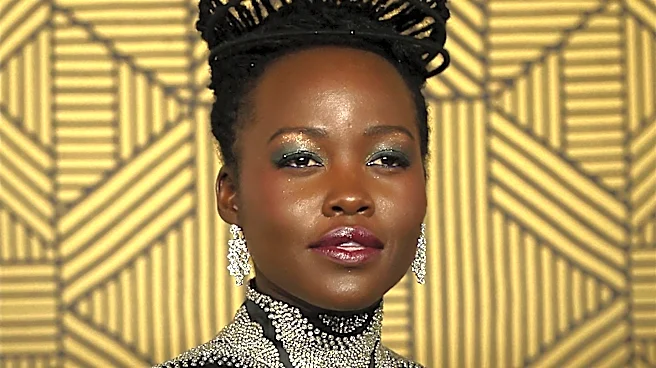
Oscar-winning actress Lupita Nyong'o has spoken out about the profound impact of representation on an individual's self-perception and confidence. Nyong'o shared her personal experience of growing up with beauty standards that led her to question her own
appearance. She revealed that seeing dark-skinned model Alek Wek celebrated for her beauty significantly altered her perspective. This exposure to diverse representation on a global stage demonstrated to Nyong'o that beauty extends beyond the narrow standards she had previously encountered. Her narrative underscores how the visibility of individuals with similar features succeeding can influence one's sense of identity and what they believe is achievable. This discussion emphasizes the critical role that diverse representation plays in shaping self-esteem and challenging conventional beauty norms.
Why It's Important?
Lupita Nyong'o's statement is important because it sheds light on a critical societal issue: the psychological impact of media representation on individuals, particularly within the U.S. and globally. In a society often dominated by specific beauty ideals, the lack of diverse representation can lead to feelings of inadequacy and self-doubt among those who do not fit these molds. Nyong'o's experience, as a prominent figure, resonates with many who have struggled with their identity due to limited or stereotypical portrayals in media. Her advocacy highlights the need for broader and more inclusive representation across all platforms, from entertainment to fashion. This push for diversity can foster a more accepting and empowering environment, allowing individuals from various backgrounds to see themselves reflected positively, thereby boosting confidence and challenging harmful societal beauty standards. Ultimately, this contributes to a more equitable and inclusive cultural landscape.
What's Next?
The ongoing conversation initiated by figures like Lupita Nyong'o is likely to further fuel discussions and initiatives aimed at increasing diversity and representation in media and entertainment. This could lead to continued pressure on Hollywood studios, fashion houses, and advertising agencies to cast a wider net in their talent searches and storytelling. We may see more projects that prioritize authentic representation and narratives that challenge traditional beauty standards. Additionally, educational programs and public awareness campaigns could emerge, focusing on the psychological benefits of diverse representation for young people. The impact could also extend to consumer behavior, with audiences increasingly supporting brands and content creators who demonstrate a commitment to inclusivity. This sustained focus on representation is expected to drive a gradual but significant shift in how beauty and identity are portrayed and perceived in mainstream culture.
Beyond the Headlines
Beyond the immediate impact on self-esteem, the broader implications of diverse representation, as highlighted by Nyong'o, touch upon deeper societal structures and cultural shifts. The celebration of diverse beauty challenges the historical power dynamics that have often dictated aesthetic norms, frequently rooted in Eurocentric ideals. By promoting a wider range of appearances as beautiful, society can begin to dismantle systemic biases and prejudices that have marginalized certain groups. This shift can lead to a more nuanced understanding of identity, moving beyond superficial characteristics to embrace the richness of human diversity. Furthermore, increased representation can foster empathy and understanding across different communities, as people are exposed to varied perspectives and experiences. This cultural evolution can contribute to a more inclusive and equitable society where individuals are valued for their unique qualities rather than conforming to a narrow set of expectations.