






What's Happening?
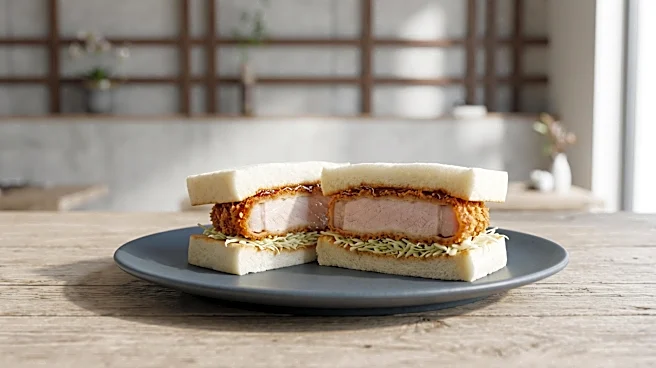
Ginza Bairin, a century-old Tokyo restaurant renowned for inventing the katsu sandwich, is set to open its first U.S. location in Las Vegas this winter. It will be a key culinary partner at Stix Asia, a new dining district in Southwest Las Vegas. Stix Asia will feature
12 Asian cuisine concepts, including Tokyo tonkotsu ramen destination Ramen BARIO and NANAMUSUBI, an organic musubi creator. Ginza Bairin, established in 1927, plans to maintain the authenticity of its flavors by importing key ingredients like breadcrumbs, tonkatsu sauce, and katsudon seasoning sauce from Japan, and sourcing kurobuta pork from Canada. The Las Vegas menu will center on tonkatsu but also introduce Japanese yoshoku dishes, which are Western-origin dishes adapted to Japanese tastes, drawing on their successful experience in Hawaii.
Why It's Important?
The expansion of Ginza Bairin and other authentic Japanese culinary concepts into Las Vegas signifies a growing demand for diverse and high-quality international dining experiences in the U.S. market. This move caters to the rapidly expanding Asian market in Southwest Las Vegas, which accounts for 40% of the city's Asian population and is its fastest-growing demographic. For Las Vegas, the arrival of Stix Asia and its partners enhances its reputation as a global culinary destination beyond the Strip, attracting both locals and tourists. It also highlights a strategic business decision to tap into a compact, diverse international audience, potentially setting a precedent for other international brands looking to enter the U.S. market through non-traditional hubs.
What's Next?
Stix Asia is scheduled to open this winter in Las Vegas, with Ginza Bairin, Ramen BARIO, and NANAMUSUBI among its initial culinary partners. The success of these establishments will likely influence future expansions of other international food concepts into the U.S. market. The operators will focus on appealing to the Las Vegas market by offering a variety of dishes while ensuring authenticity. For instance, Ramen BARIO will provide alternatives to ramen for warmer weather, such as fried rice and soba. NANAMUSUBI will import rice directly from Niigata, Japan, to maintain quality. The performance of these restaurants will be closely watched as they aim to introduce traditional Japanese flavors and dining experiences to a new American audience.
Beyond the Headlines
This culinary venture represents more than just new restaurants; it's a cultural exchange that introduces authentic Japanese food traditions to a broader American audience. The emphasis on maintaining original flavors and importing specific ingredients underscores a commitment to cultural integrity, rather than adapting to perceived American tastes. This approach challenges the common practice of localizing international cuisines, potentially fostering a deeper appreciation for global culinary heritage. Furthermore, the choice of Las Vegas, a city known for its entertainment and tourism, as the entry point for these traditional Japanese establishments, suggests a strategic shift in how international brands perceive and penetrate the U.S. market, moving beyond established cultural enclaves to reach a more diverse and transient population.