

What's Happening?
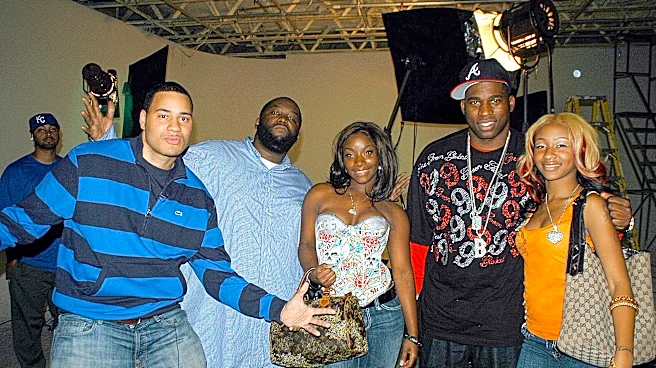
Rapper Fat Trel has publicly claimed that French Montana's 2013 hit song, 'Ain't Worried About Nothin,' utilized a hook pattern similar to one he had previously recorded. According to Fat Trel, he recorded a song in New York with a distinct hook, and
he suspects a producer later played his recording for French Montana, leading to the alleged borrowing. Despite the allegation, Fat Trel stated in a PrimeQualityTV interview that he holds no anger towards French Montana from a business perspective, emphasizing their personal relationship. He expressed being upset with the producer involved, rather than French Montana, upon hearing the success of 'Ain't Worried About Nothin' and recognizing the repeated phrasing in the hooks. French Montana released 'Ain't Worried About Nothin' in April 2013 as part of his album 'Excuse My French,' with a remix featuring Rick Ross, Snoop Dogg, and Diddy later that year.
Why It's Important?
This allegation highlights a recurring issue within the music industry concerning intellectual property and the creative process, particularly regarding song composition and 'borrowed' elements. For artists, especially those in the early stages of their careers like Fat Trel was at the time, such incidents can impact their recognition, potential earnings, and the perceived originality of their work. The situation underscores the complex dynamics between artists, producers, and record labels, where ideas and musical patterns can circulate and potentially be reinterpreted or reused. While Fat Trel has stated he is not angry with French Montana, the public nature of his claim could spark discussions about ethical practices in music production and the need for clearer attribution or compensation when creative elements are shared or adapted. This event also sheds light on the challenges artists face in protecting their unique contributions in a fast-paced and collaborative industry.
What's Next?
The immediate next steps are uncertain, as Fat Trel has not indicated any intention to pursue legal action against French Montana. His public statement appears to be more about clarifying his perspective on the song's origin rather than initiating a formal dispute. However, the allegation could prompt further discussion within the hip-hop community regarding creative ownership and collaboration. Other artists or industry figures might weigh in on the matter, potentially leading to broader conversations about how hooks and musical ideas are developed and shared. This situation could also influence how producers and artists approach collaborations and the protection of their intellectual property in future projects, potentially leading to more explicit agreements or documentation to prevent similar disputes.
Beyond the Headlines
Beyond the direct claims, this incident touches upon the broader cultural and legal landscape of sampling and interpolation in music. While direct sampling often requires clearance, the 'borrowing' of a hook pattern, as alleged here, falls into a more ambiguous area. It raises questions about the definition of originality and the boundaries of inspiration versus appropriation in creative works. The hip-hop genre, in particular, has a rich history of building upon existing sounds and phrases, making these distinctions even more nuanced. This case could serve as a subtle reminder of the ongoing tension between artistic freedom and intellectual property rights, potentially influencing how future artists and legal professionals interpret and navigate these creative territories. It also highlights the power dynamics within the industry, where established artists might inadvertently or intentionally benefit from the creative contributions of less prominent figures.