







What's Happening?
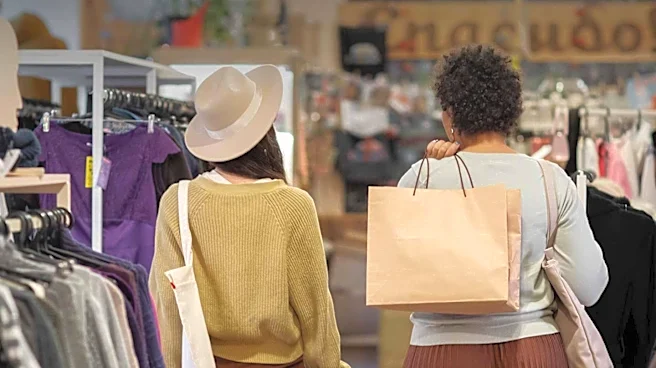
Communities across the Northshore, including Covington and Mandeville, are being recognized for their diverse range of secondhand shopping options. These areas offer thrift stores, vintage shops, consignment boutiques, and resale stores, providing opportunities
for residents and visitors to find unique items. The experience is described as a 'treasure hunt' that combines sustainable shopping with local exploration. Many of these resale establishments also contribute to local nonprofits and community organizations, adding a charitable aspect to the shopping experience. The variety of goods available spans from clothing and home décor to furniture and collectibles, catering to different needs and interests. This trend aligns with a broader movement towards sustainable consumption and the repurposing of goods.
Why It's Important?
The emphasis on secondhand shopping in Northshore communities reflects a growing national interest in sustainable practices and circular fashion. This trend is important for several reasons: it reduces textile waste by extending the life of clothing and other goods, lessens the demand for new production which often has significant environmental impacts, and supports local economies. For consumers, it offers an affordable alternative to new purchases and the chance to discover unique, often vintage, items with character. The involvement of local nonprofits and community organizations in some resale stores also means that consumer spending can directly benefit local causes, fostering community engagement and support. This movement challenges the fast fashion model by promoting reuse and upcycling, contributing to a more environmentally conscious consumer culture.
What's Next?
As consumer awareness of environmental issues and the benefits of sustainable living continues to grow, the popularity of secondhand shopping in areas like the Northshore is likely to increase. This could lead to an expansion of existing thrift stores and the emergence of new consignment and vintage boutiques. Communities may also see an increase in events or initiatives promoting thrifting and upcycling, further integrating these practices into the local lifestyle. The success of these shops could also inspire other regions to highlight their own secondhand shopping opportunities, contributing to a broader shift in retail consumption patterns across the U.S. Educational workshops on upcycling and sustainable fashion, similar to those offered by brands like Haus of Raya, could also become more prevalent.
Beyond the Headlines
The rise of secondhand shopping goes beyond mere economic transactions; it represents a cultural shift towards valuing longevity, craftsmanship, and individuality over mass-produced, disposable goods. This movement has ethical implications, as it encourages consumers to consider the environmental and social costs of their purchases. It also fosters creativity, as shoppers often repurpose or customize their finds, giving items a new life and personal touch. The 'treasure hunt' aspect of thrifting taps into a desire for discovery and uniqueness, offering an antidote to the uniformity of mainstream retail. This trend could lead to a re-evaluation of what constitutes 'value' in consumer goods, moving away from novelty and towards durability and ethical sourcing.