




What's Happening?
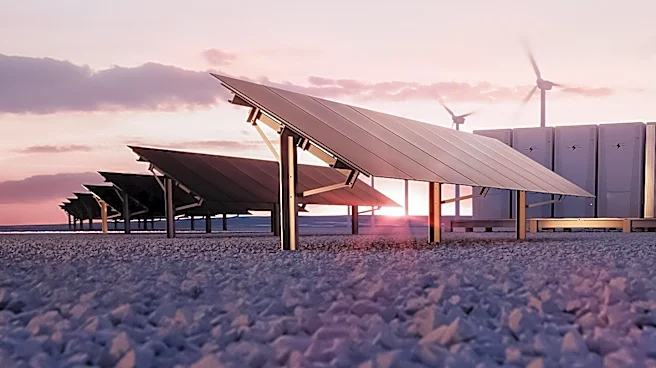
Chinese battery manufacturer CATL has reported a 42% increase in net profit for the first half of 2026, driven primarily by a surge in demand for energy storage systems (ESS). While global demand for electric vehicles (EVs) remains volatile, CATL's revenue
from ESS rose by 88% year-over-year, accounting for 19% of its total revenue. The company has responded to regulatory pressures and declining domestic EV sales by focusing on the growing ESS market. CATL aims to make ESS a core pillar of its business, targeting it to account for half of its sales by 2030. The company is also expanding its presence in overseas markets and investing in new battery technologies, such as sodium-ion and solid-state batteries.
Why It's Important?
CATL's strategic pivot towards energy storage systems highlights the shifting dynamics in the global battery market. As the demand for EVs fluctuates, the growth of ESS presents a stable revenue stream for battery manufacturers. This shift could influence the broader energy sector by supporting renewable energy integration and enhancing grid stability. CATL's focus on ESS also reflects a broader trend of diversifying energy solutions beyond automotive applications. The company's expansion into international markets and investment in new technologies could strengthen its competitive position and drive innovation in the battery industry.
What's Next?
CATL's continued investment in ESS and new battery technologies suggests a long-term commitment to diversifying its business model. The company may further expand its global footprint through partnerships and licensing deals, particularly in regions with growing renewable energy needs. As CATL aims to increase its ESS market share, it may face competition from other battery manufacturers entering the sector. The development of new battery technologies, such as sodium-ion and solid-state batteries, could also impact the future landscape of energy storage and electric mobility.