




What's Happening?
A recent ranking of the 25 greatest players in Dallas Cowboys history has ignited discussion among the team's fanbase. The list, which aims to identify the most impactful players in the franchise's storied past, includes both expected legends and some
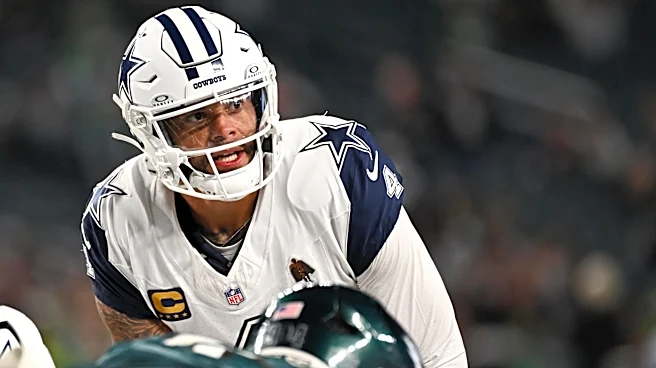
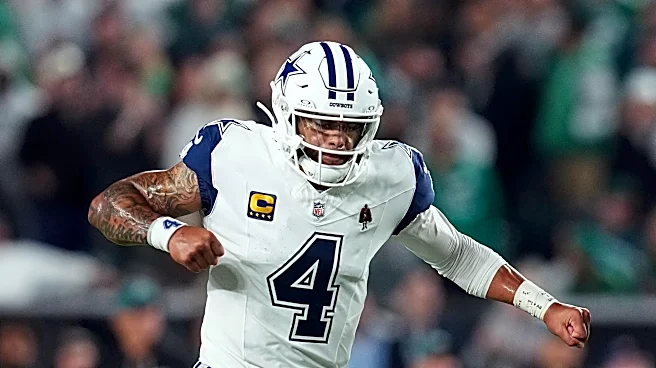
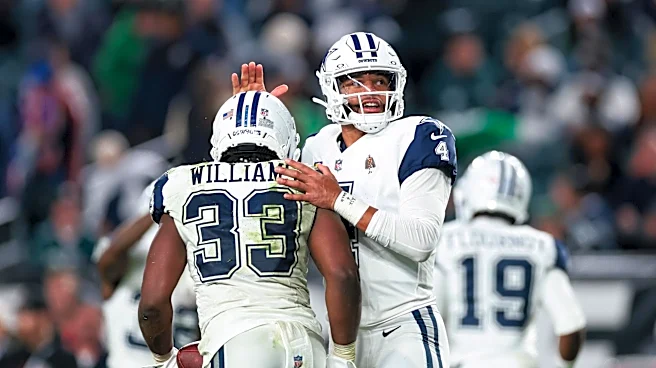
controversial choices. Notably, players like Dez Bryant, Charles Haley, Tony Hill, Ed 'Too Tall' Jones, Don Meredith, Nate Newton, Micah Parsons, Drew Pearson, Don Perkins, Tony Romo, and Tyron Smith were among those who did not make the top 25, despite their significant contributions. The article highlights the difficulty in compiling such a list for a team with a rich history and numerous iconic figures. The ranking features players from various eras and positions, including running backs, cornerbacks, defensive ends, safeties, wide receivers, linebackers, offensive tackles, and quarterbacks, each with detailed summaries of their achievements and impact on the team. The inclusion of current players like CeeDee Lamb and Dak Prescott in the top 25 has particularly fueled debate.
Why It's Important?
This ranking is important because it reflects and shapes the narrative around one of the most iconic and valuable sports franchises in the United States, the Dallas Cowboys, often referred to as 'America's Team.' Such lists generate significant fan engagement, drive media discussions, and contribute to the team's cultural legacy. For current players, inclusion or exclusion can impact their public perception and future contract negotiations, while for retired players, it solidifies their place in franchise history. The debate surrounding these rankings also highlights the subjective nature of evaluating athletic greatness and the emotional connection fans have to their team's heroes. The discussion can influence merchandise sales, viewership, and overall brand loyalty, demonstrating the economic and social power of sports narratives in the U.S.
What's Next?
The publication of this ranking is likely to continue to generate extensive discussion across sports media, fan forums, and social media platforms. Analysts and former players may offer their own versions of the list, further fueling the debate. For the Dallas Cowboys organization, such discussions, while sometimes contentious, ultimately serve to keep the team in the public consciousness during the offseason or between major events. Future performances by current players on the list, such as CeeDee Lamb and Dak Prescott, will be scrutinized in the context of their historical ranking, potentially leading to shifts in future iterations of such lists. The ongoing dialogue reinforces the team's status as a national sports institution.
Beyond the Headlines
Beyond the immediate fan debates, this type of historical ranking underscores the broader cultural significance of sports in American society. It reflects how collective memory is constructed and contested within a community, with different generations of fans holding varying perspectives on who constitutes a 'great' player. The emphasis on individual achievements within a team sport also highlights the American value placed on individual excellence and heroism. Furthermore, the detailed statistical breakdowns and career narratives provided in such rankings serve as a form of oral history, preserving the legacies of athletes and contributing to the mythology of the sport itself. This process of ranking and re-ranking is a continuous cultural exercise that helps define and redefine what it means to be a part of 'America's Team.'