
What's Happening?
U.S. stock markets, including the New York Stock Exchange (NYSE) and Nasdaq, are closed today in observance of Labour Day. This national holiday, celebrated annually on the first Monday of September, honors
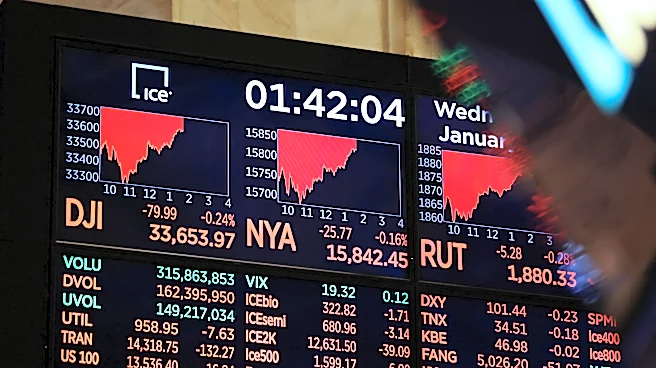
the American labor movement and its contributions to the nation's economic development. Consequently, there will be no trading activity on Wall Street, and U.S. stock market futures will not provide regular signals from the cash market. Trading operations are scheduled to resume on Tuesday. The closure follows a Friday session where the Dow Jones, S&P 500, and Nasdaq 100 all experienced declines, attributed to stronger-than-expected U.S. labor market data, which heightened expectations for a potential interest rate hike by the Federal Reserve.
Why It's Important?
The closure of U.S. stock markets for Labour Day has a direct impact on global financial markets, as it temporarily removes a major source of liquidity and price discovery. While other international markets, such as the Frankfurt Stock Exchange, continue regular trading, the absence of U.S. market activity means that investors worldwide will lack key impulses and benchmarks from the world's largest economy. This can lead to reduced trading volumes and potentially increased volatility in other markets that remain open. For U.S. investors, it provides a pause for reflection on recent market trends, particularly the implications of the strong labor market data on future monetary policy decisions by the Federal Reserve. The holiday underscores the historical significance of labor in the U.S. economy and its ongoing influence on economic policy and market sentiment.
What's Next?
U.S. stock markets will reopen for normal trading on Tuesday. Investors will be closely watching for renewed activity and how global markets react to the re-entry of U.S. trading volumes. The focus will likely remain on economic indicators, particularly any further data that could influence the Federal Reserve's stance on interest rates. The strong U.S. labor market data from the previous week will continue to be a significant factor in market expectations. Companies like Lululemon, Tesla, and the semiconductor industry, which saw notable movements on Friday, will be under scrutiny as trading resumes. The broader market will assess whether the recent declines were a temporary reaction or indicative of a more sustained trend in response to economic outlooks and monetary policy expectations.
Beyond the Headlines
Labour Day, beyond its market implications, serves as a reminder of the foundational role of labor in shaping the U.S. economy and society. Its origins in the late 19th-century labor movement highlight the ongoing dialogue between economic growth, worker rights, and social welfare. The holiday's impact on financial markets, though temporary, illustrates the interconnectedness of national holidays with economic cycles and global trading patterns. The pause in trading offers a moment to consider the broader economic narrative, where employment figures and wage growth are not just data points but reflections of societal well-being and consumer purchasing power. This interplay between labor, economic policy, and market performance is a continuous theme that extends beyond daily trading fluctuations.