








What's Happening?
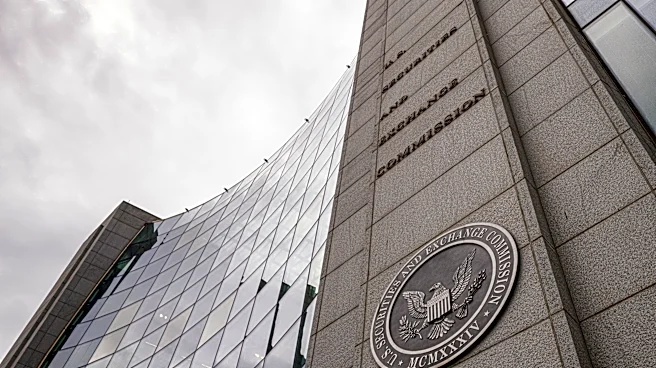
The Securities and Exchange Commission (SEC) has implemented a new clearing rule for U.S. Treasury securities, requiring eligible cash trades to be centrally cleared by December 31, 2026, and eligible repurchase agreement (repo) trades by June 30, 2027.
This mandate represents a significant structural change to the U.S. Treasury market, which traditionally saw most trades settled bilaterally. The SEC's rule, adopted in December 2023, necessitates that secondary market trades for in-scope U.S. Treasury securities and repos be cleared through a covered clearing agency (CCA) if one of the parties is a member of that CCA. SIFMA, a leading industry association, has been actively preparing the industry for these changes, developing market-standard clearing documentation, operational playbooks, and surveying readiness. While the industry is largely prepared for the cash deadline, substantial work remains for the repo segment.
Why It's Important?
This shift to central clearing for U.S. Treasury securities is critical for enhancing the stability and resilience of the global financial system. The U.S. Treasury market is the world's most important securities market, and central clearing aims to mitigate systemic risks by reducing counterparty exposure and increasing transparency. For broker-dealers, institutional investors, interdealer brokers, principal trading firms, and clearing agencies, the rule will necessitate significant operational, legal, and technological adjustments. The phased implementation, with cash trades by December 2026 and repo trades by June 2027, provides time for market participants to adapt. However, the complexity of repo transactions and the need for clarity on certain rules, particularly for inter-affiliate and cross-border transactions, pose ongoing challenges. Successful implementation is vital to maintain the depth and liquidity of the U.S. Treasury market while strengthening its infrastructure.
What's Next?
The industry is currently focused on meeting the December 31, 2026, deadline for central clearing of eligible Treasury cash transactions. Following this, attention will shift to the June 30, 2027, deadline for eligible Treasury repo transactions, which presents a broader scope and more complex challenges. SIFMA continues to work with its members, market infrastructure providers, and the SEC to address remaining gaps, particularly concerning repo documentation, regulatory relief for inter-affiliate transactions, and clarity on broker-dealer capital and customer protection rules. Ongoing surveys and working groups will monitor industry readiness and identify areas requiring further support, including technology integration and contingency planning. The SEC's consideration of SIFMA AMG's request to extend relief to mortgage REITs for repo clearing is also a key development to watch.
Beyond the Headlines
The move to central clearing for U.S. Treasury securities reflects a broader regulatory trend towards increasing transparency and reducing systemic risk in financial markets, particularly in the wake of past financial crises. This initiative could set a precedent for other large, bilaterally settled markets globally. The challenges in implementing the repo clearing mandate highlight the intricate nature of financial instruments and the difficulties in standardizing complex transactions across diverse market participants and international jurisdictions. The emphasis on standardized documentation and operational frameworks underscores the importance of industry collaboration with regulators to achieve effective and efficient market reforms. This transition also raises questions about the potential impact on market liquidity and the cost of doing business for smaller firms, which may face higher compliance burdens.