






What's Happening?
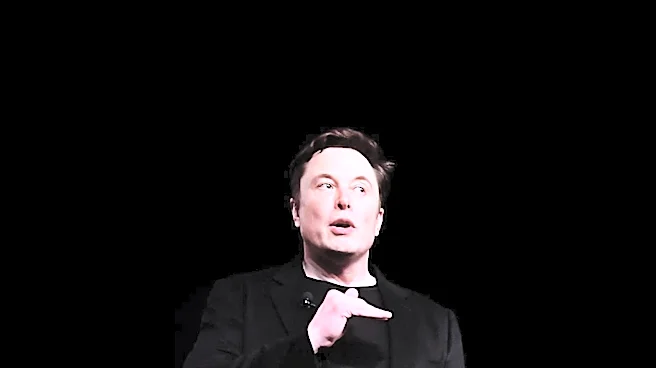
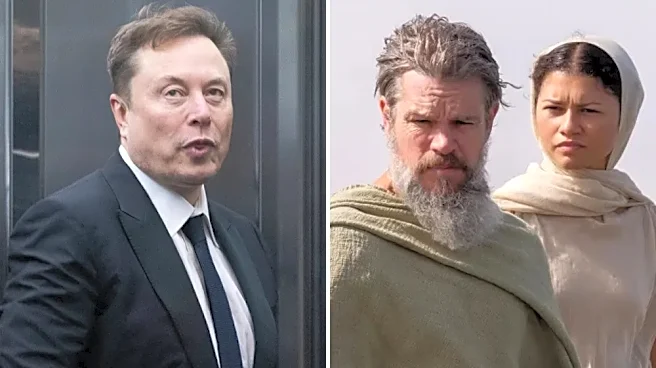
Elon Musk's first seven-minute episode of an AI-generated adaptation of 'The Odyssey' has been released, drawing significant criticism and ridicule online. Musk had previously promised a full-length, 'historically accurate' version of the 2,800-year-old
Homeric epic, aiming to challenge Hollywood and specifically a recent Christopher Nolan film adaptation. His criticism of Nolan's version centered on its perceived 'wokeness,' particularly the casting of actress Lupita Nyong'o as Helen of Troy and Clytemnestra. However, Musk's own AI-generated short has been met with negative feedback regarding its jarring scene transitions, 'plastic' character models, and the use of modern English dialogue, which many users found inconsistent with claims of historical accuracy. The project was created using Grok Imagine, SpaceXAI's AI image and video generation tool.
Why It's Important?
This event highlights the current limitations and public perception challenges facing AI-generated content, particularly in creative fields like filmmaking. Despite advancements in AI technology, the reception of Musk's 'Odyssey' episode suggests that current AI tools may struggle to replicate the nuance, narrative craft, and aesthetic quality expected by audiences. This could impact the broader adoption and investment in AI-driven creative projects, as the public and critics demonstrate a clear preference for human-directed artistry. For the entertainment industry, it underscores the ongoing debate about the role of AI in content creation and the potential for backlash when AI-generated works fall short of traditional production standards. It also reflects the ongoing 'culture wars' in media, where figures like Musk are attempting to create alternative content that aligns with their specific viewpoints, though not always successfully in terms of execution.
What's Next?
The initial negative reception of the first episode raises questions about the future of Musk's 'Odyssey' project and other similar AI-generated ventures. While some users acknowledged the project as a step forward for AI video, the widespread ridicule suggests that significant improvements are needed for AI to genuinely compete with traditional filmmaking. It remains to be seen how Musk and his associated studios, SpaceXAI and Wonder Studios, will respond to the criticism and whether they will continue to develop and release subsequent episodes. The incident may prompt further discussions within the tech and entertainment sectors about the ethical and artistic implications of AI in creative endeavors, potentially influencing future development and investment strategies in this rapidly evolving field.
Beyond the Headlines
The 'Odyssey' episode's reception touches upon deeper implications regarding the intersection of technology, art, and cultural commentary. Musk's attempt to create a 'historically accurate' version while criticizing a mainstream adaptation for 'wokeness' reflects a broader cultural tension surrounding representation and traditional narratives. The failure of the AI to deliver on these promises, particularly in terms of authenticity and quality, raises questions about whether technology alone can resolve complex cultural debates or produce compelling art without human creative oversight. It also highlights the challenge of maintaining artistic integrity and audience engagement when the primary motivation appears to be a reaction against perceived cultural shifts rather than a genuine artistic vision. The incident could contribute to a more critical examination of AI's role in shaping cultural products and narratives.