



What's Happening?
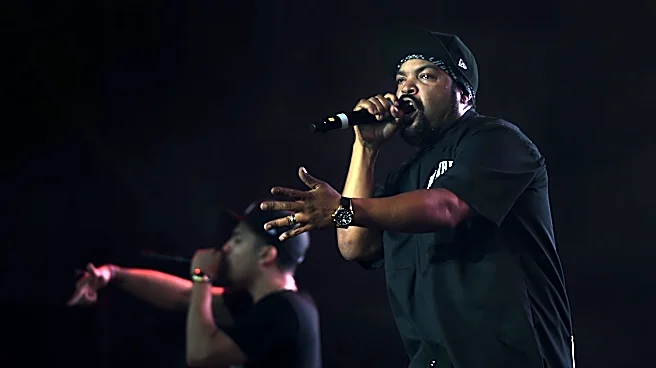
Dr. Dre and Ice Cube recently engaged in a discussion about the impact of artificial intelligence (AI) on the music and film industries during the inaugural episode of the 'Listen & Laugh' podcast, which Ice Cube co-hosts with Mike Epps. Dr. Dre expressed
significant enthusiasm for AI, highlighting its potential to revolutionize creativity in both fields. He suggested that AI could enable artists like Ice Cube to appear in films without physically being present, merely by approving the use of their image and voice. Dr. Dre compared AI's role to that of sampling in music, arguing that it represents a new frontier for artistic expression and that those who resist it risk being left behind. He stated that he would welcome a producer using AI to replicate his mixing style or even a remake of his classic song 'Nuthin' but a 'G' Thang' that surpassed the original.
Why It's Important?
This debate between two influential figures in the entertainment industry underscores a growing tension regarding AI's integration into creative processes. Dr. Dre's embrace of AI reflects a perspective that views technology as an enabler of new creative avenues and efficiencies, potentially leading to innovative content creation and distribution models. Conversely, Ice Cube's skepticism highlights concerns about the potential for AI to devalue human artistry, promote shortcuts over genuine effort, and ultimately lead to computers gaining 'total control' over the creative process. This discussion is crucial for the U.S. entertainment sector as it grapples with intellectual property rights, artist compensation, and the evolving definition of authorship in an AI-driven landscape. The outcome of these debates could shape future industry standards, contractual agreements, and the overall creative ecosystem, affecting artists, producers, and consumers alike.
What's Next?
The ongoing dialogue between artists like Dr. Dre and Ice Cube is likely to intensify as AI technology continues to advance and become more accessible. Industry stakeholders, including record labels, film studios, artists' unions, and legal experts, will need to address complex questions surrounding AI-generated content, copyright ownership, and fair compensation for artists whose likenesses or styles are utilized by AI. We can anticipate further discussions, policy proposals, and potentially new legal frameworks aimed at navigating the ethical and economic implications of AI in creative industries. The entertainment sector may see the emergence of new business models that incorporate AI while attempting to safeguard human creativity and intellectual property. Artists may also explore new ways to leverage AI as a tool while maintaining their artistic integrity and control.
Beyond the Headlines
The differing views of Dr. Dre and Ice Cube on AI touch upon fundamental philosophical questions about the nature of creativity and the role of technology in human endeavors. Dr. Dre's perspective suggests a post-humanist view where technology extends human capabilities and redefines artistic boundaries. Ice Cube's concerns, however, resonate with anxieties about authenticity, the value of human labor, and the potential for technology to diminish the intrinsic worth of artistic struggle and originality. This debate extends beyond the entertainment industry, reflecting broader societal discussions about automation, job displacement, and the future of human agency in an increasingly AI-driven world. The entertainment industry, often a bellwether for cultural shifts, is at the forefront of grappling with these profound implications, setting precedents for how other creative and professional fields might adapt to the rise of AI.