


What's Happening?
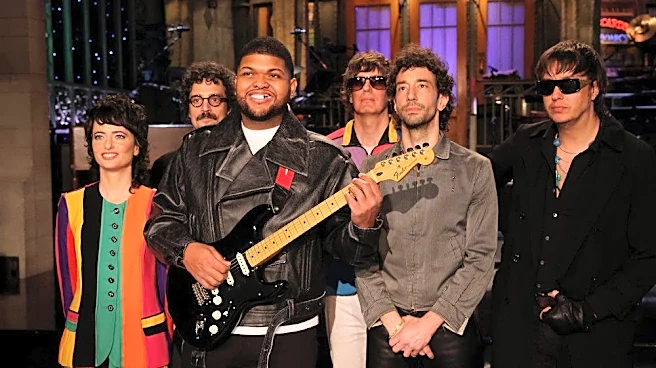
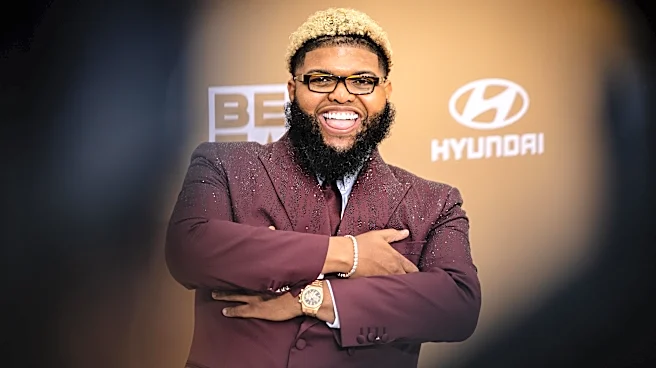
Druski, a social media creator, recently hosted Saturday Night Live, marking a significant milestone as the first host in the show's history to have built his career primarily through social media. This event, alongside the premiere of his semi-scripted
comedy 'Collect & Praise' on Netflix, indicates a new phase in the creator economy. This 'franchise era' emphasizes creators transforming their channels into programming brands and their original characters and story worlds into enduring intellectual property. Hollywood is beginning to learn from creators' methods of continuous programming, community engagement, rapid experimentation, and immediate feedback, while creators are seeking Hollywood's expertise in franchise building and long-term intellectual property development.
Why It's Important?
This development is important because it signifies a convergence between the traditional entertainment industry and the rapidly evolving creator economy. Hollywood, historically reliant on expensive and lengthy development cycles, is recognizing the value of creators' direct audience relationships and data-driven insights. This shift could lead to more efficient content development, as creators can test ideas and formats with their established audiences before significant financial investment. For creators, partnering with Hollywood offers the infrastructure, financing, and expertise to scale their brands into multi-platform franchises, extending their reach beyond individual content pieces. This collaboration has the potential to democratize access to large-scale production and distribution for creators, while injecting new, audience-tested ideas into mainstream entertainment.
What's Next?
The trend of creators transitioning into mainstream entertainment is expected to accelerate, with more social media personalities and digital content creators securing roles in film, television, and other traditional media. This will likely lead to increased partnerships between Hollywood studios and creator-first entertainment studios. The entertainment industry will continue to adopt creator economy instincts, such as leveraging audience feedback for content development and experimenting with new formats. Conversely, creators will increasingly focus on building intellectual property that can outlive specific platforms and formats, aiming for long-term brand sustainability. This mutual learning and collaboration will likely reshape how entertainment content is conceived, produced, and consumed, with a greater emphasis on audience engagement and data-driven decision-making.
Beyond the Headlines
The rise of creators like Druski to mainstream platforms challenges traditional notions of celebrity and talent discovery. It highlights a shift in cultural influence from established institutions to individual digital entrepreneurs. This evolution also raises questions about the future of traditional media gatekeepers and the power dynamics within the entertainment industry. As creators gain more leverage, they may demand greater ownership and creative control over their intellectual property. Furthermore, the emphasis on audience feedback and community engagement in content development could lead to more interactive and responsive forms of entertainment, blurring the lines between creators and consumers. This trend could ultimately foster a more diverse and inclusive entertainment landscape, where a wider range of voices and stories can find a global audience.