







What's Happening?
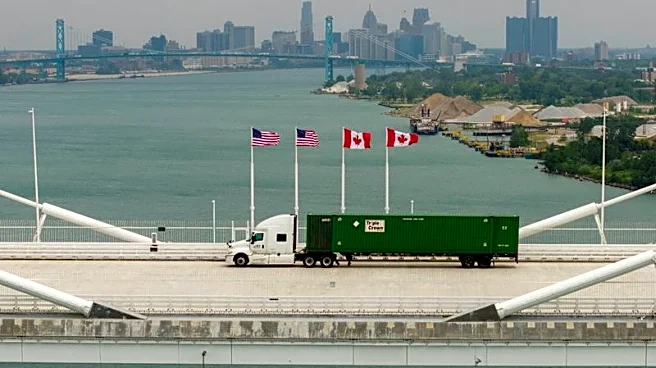
Trade talks between the United States and Canada collapsed late Friday in Washington, leading the U.S. to impose 50% tariffs on approximately $20 billion worth of Canadian goods. This amount represents about 5% of Canada's total annual exports to the U.S. The
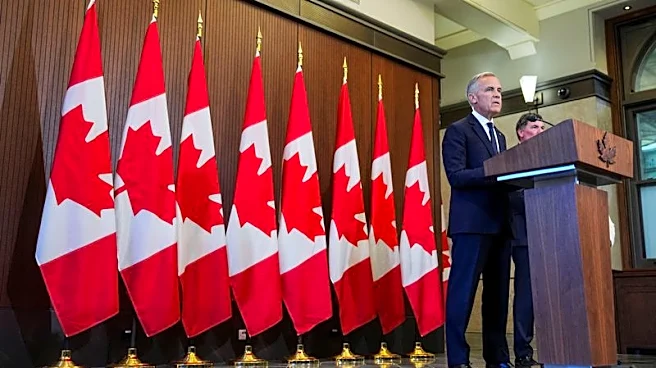
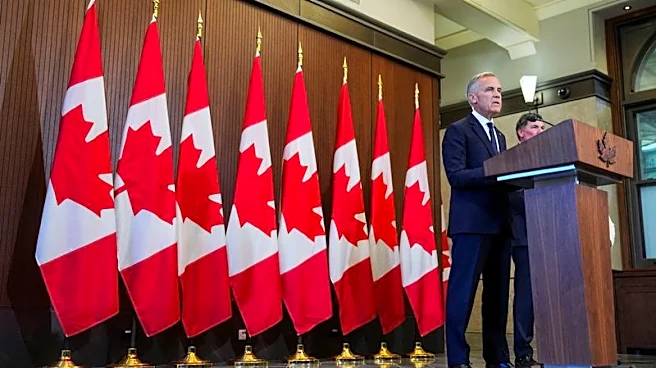
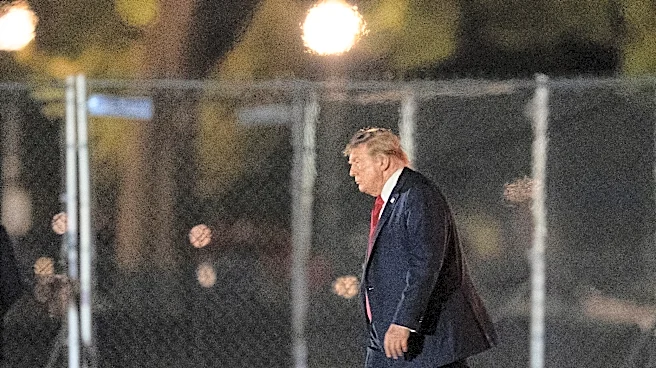
tariffs cover a variety of products, including wooden hockey sticks. Canadian Prime Minister Mark Carney swiftly responded, announcing that Canada would implement 'dollar-for-dollar' retaliatory tariffs on U.S. steel, dairy, and electronics, effective September 8. Carney described the U.S. action as an act of aggression and a 'miscalculation,' attributing the breakdown in negotiations to what he termed 'uneconomic' and 'unfair' demands from Washington. U.S. Trade Representative Jamieson Greer stated that Canada declined to finalize a trade deal that would have included aerospace supply chain coordination, critical minerals cooperation, and a path to USMCA renegotiation. President Trump also commented, suggesting Canada desired the benefits of a U.S. state without being one.
Why It's Important?
The re-escalation of trade tensions between the U.S. and Canada introduces significant cross-border trade risk into North American markets. Investors had recently begun to price in a de-escalation of trade disputes, making this development a reversal of expectations. The Canadian dollar has already experienced renewed pressure, with forecasts suggesting a potential slide against the U.S. dollar. Exporters of steel, dairy, and electronics in both countries are expected to face the most direct and immediate impact once Canada's retaliatory measures take effect. The ongoing dispute also complicates the broader effort to renew the US-Mexico-Canada Agreement (USMCA). While formal renegotiation talks have commenced between Washington and Mexico City, discussions with Ottawa have not, raising concerns about prolonged uncertainty and the timeline for de-escalation. The energy sector is also a watchpoint, given its historical sensitivity to any expansion of tariff scopes.
What's Next?
Canada's retaliatory tariffs on U.S. steel, dairy, and electronics are scheduled to take effect on September 8, marking the next significant flashpoint in the escalating trade dispute. The absence of formal USMCA renewal talks between the U.S. and Canada, in contrast to the ongoing discussions with Mexico, suggests that a swift resolution to the current tensions is unlikely. Traders and businesses will be closely monitoring the impact of these tariffs on supply chains and market stability. The rhetoric from both sides indicates a continued period of disagreement, with each government appearing committed to its stance. The potential for further retaliatory cycles remains, which could lead to broader economic implications for both nations and the North American trade landscape.
Beyond the Headlines
This trade dispute highlights the complex and often volatile nature of international trade relations, even between historically close allies like the U.S. and Canada. The imposition of tariffs, while seemingly targeting specific goods, can have ripple effects across various industries and consumer markets, potentially leading to higher costs and reduced availability of certain products. The breakdown in negotiations also underscores the challenges in achieving consensus on trade agreements, particularly when national interests diverge. The long-term implications could include a re-evaluation of supply chain strategies by businesses operating in North America, potentially leading to diversification away from reliance on cross-border trade. Furthermore, the political rhetoric surrounding the tariffs could strain diplomatic relations, impacting future cooperation on other bilateral and multilateral issues.