




What's Happening?
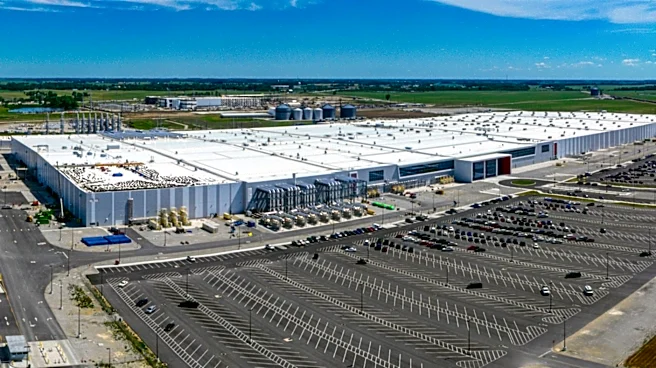
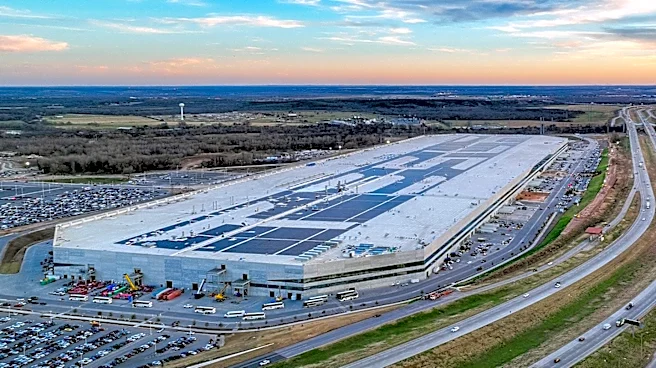
Rivian Automotive is actively scaling its supply chain and logistics capabilities to support the growth of its R2 vehicle segment and the development of its new manufacturing facility in Stanton Springs, Georgia. Michael Schwaeble, Rivian's vice-president
for logistics, emphasized the company's focus on expanding inbound logistics capacity, adding consolidation centers, and increasing warehouse flows. Rivian is also working to establish more direct relationships with logistics providers, ports, and suppliers, moving away from heavily outsourced point-to-point logistics. The company's direct-to-consumer model necessitates a parallel expansion of its delivery network to ensure timely vehicle delivery to customers as production increases. The design of the Georgia manufacturing site is material-flow focused, with logistics considerations integrated from the earliest stages of development. Rivian's vertically integrated approach, including in-house electric motor production and battery expertise, influences its supply chain requirements, with semiconductors and battery cells identified as critical areas for material flow security. Additionally, the company's software-centric vehicle architecture allows for over-the-air updates, which can decouple hardware availability from software configuration, offering logistics advantages.
Why It's Important?
This strategic expansion of Rivian's supply chain and logistics infrastructure is crucial for its growth in the electric vehicle market, particularly as it targets the midsize vehicle segment with the R2. By scaling its logistics, Rivian aims to enhance efficiency, reduce costs, and improve delivery times, which are critical factors in a competitive industry. The direct engagement with logistics partners and suppliers signifies a move towards greater control over its operations, potentially leading to more resilient and responsive supply chains. The material-flow focused design of the Georgia plant underscores a commitment to optimized production processes, which can translate into higher output and better quality control. For the U.S. automotive industry, Rivian's investment in a new manufacturing facility in Georgia represents job creation and economic development in the region, while also contributing to the broader adoption of electric vehicles. The emphasis on in-house capabilities and direct relationships could also set new standards for supply chain management within the EV sector, influencing other manufacturers to re-evaluate their own logistics strategies.
What's Next?
Rivian will continue to expand its consolidation centers and warehouse capacity, alongside strengthening its relationships with logistics partners, ports, and suppliers. The construction and operationalization of the Stanton Springs, Georgia manufacturing facility will be a key focus, with logistics playing a central role in its design and execution. The company will also need to ensure its delivery network scales effectively to match increasing production volumes for the R2. Further development of its vertically integrated approach, particularly in securing critical components like semiconductors and battery cells, will be ongoing. The success of these initiatives will be closely watched by industry observers, as they will indicate Rivian's ability to transition from a niche player to a more significant competitor in the broader EV market. The company's ability to manage these complex logistical challenges will directly impact its production targets, market share, and overall profitability in the coming years.
Beyond the Headlines
The strategic decisions made by Rivian regarding its supply chain and logistics have broader implications for the future of manufacturing and distribution in the electric vehicle industry. By taking greater control over its logistics network and fostering direct relationships, Rivian is challenging traditional automotive supply chain models that often rely heavily on third-party outsourcing. This shift could lead to a more integrated and resilient manufacturing ecosystem, potentially reducing vulnerabilities to global supply chain disruptions. The focus on a material-flow optimized plant design in Georgia highlights an evolving approach to factory planning, where logistics are considered a core element from inception rather than an afterthought. Furthermore, Rivian's emphasis on its direct-to-consumer model and the need for a synchronized delivery network points to a future where vehicle sales and distribution are increasingly streamlined and customer-centric. This could influence how other automotive manufacturers approach their sales and delivery strategies, potentially leading to a more direct and efficient consumer experience across the industry.