





What's Happening?
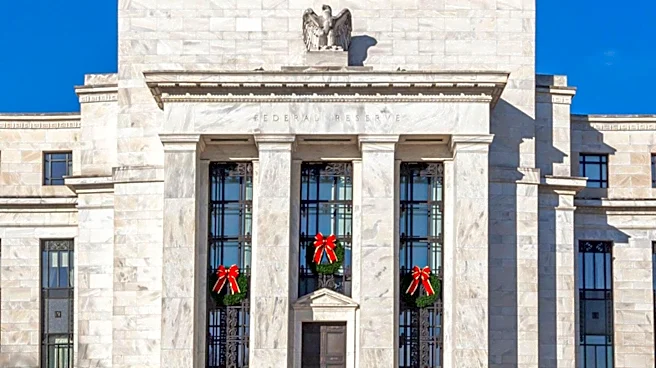
The Federal Reserve's preferred inflation gauge, the Personal Consumption Expenditures (PCE) price index, showed a temporary cooling in June, with a 0.1% monthly decline and an annual rate of 3.7%. This decrease was largely driven by a drop in energy
prices following a temporary truce in the Middle East conflict. However, economists warn that this relief may be short-lived, as renewed tensions and volatile energy prices could reverse the trend. Core inflation, excluding energy and food, remained steady at 3.3%, indicating persistent underlying inflationary pressures. The resilience of consumer spending, supported by pay gains and tax refunds, continues to drive economic activity.
Why It's Important?
The temporary easing of inflation provides a brief respite for consumers and businesses, but the underlying pressures remain a concern. The geopolitical tensions and energy price volatility pose risks to economic stability, potentially impacting consumer sentiment and spending. The Federal Reserve's focus on achieving its inflation target is crucial for maintaining economic confidence and preventing inflation from eroding purchasing power. The persistence of core inflation highlights the challenges in achieving price stability, which is essential for long-term economic growth. Stakeholders must navigate these uncertainties as the Fed seeks to balance inflation control with economic support.
What's Next?
The Federal Reserve is likely to continue monitoring inflation trends and geopolitical developments closely. Future policy adjustments may depend on the stability of energy prices and the broader impact of international conflicts. The Fed's commitment to achieving its inflation target will guide its decisions on interest rates and monetary policy. Stakeholders should prepare for potential changes in economic conditions as the Fed responds to evolving inflationary pressures.