



What's Happening?
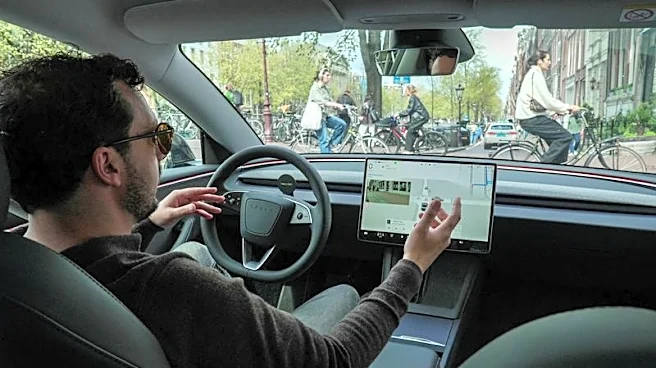
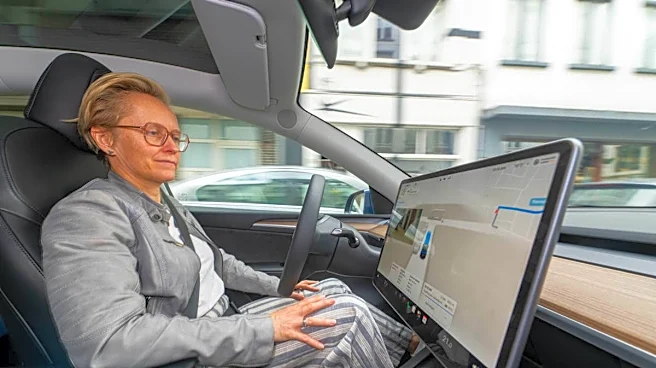
Tesla Inc. has announced that its Full Self-Driving (FSD) technology has received approval from the Danish Road Traffic Authority, marking a significant step for the company in expanding its autonomous vehicle capabilities in Europe. This approval is currently
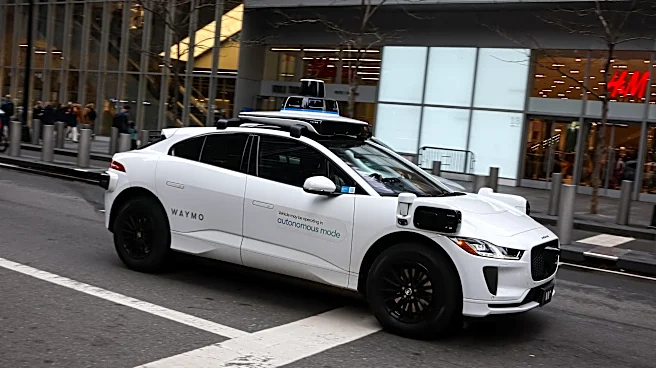
tentative, as it awaits formal endorsement from the European Union Commission. The approval follows an initial clearance by Dutch regulators in April, which Denmark and Estonia have now recognized. This development is part of Tesla's broader strategy to deploy its FSD technology across EU member states, contingent on comprehensive EU-wide approval. The company continues to face skepticism regarding the effectiveness of its self-driving software, with comparisons often made to Waymo's larger robotaxi fleet. Despite these challenges, Tesla is advancing its autonomous driving ambitions, supported by its manufacturing of Cybercabs and efforts to secure robotaxi infrastructure permits.
Why It's Important?
The approval of Tesla's FSD technology in Denmark represents a critical milestone for the company as it seeks to expand its presence in the European market. This move could potentially enhance Tesla's competitive edge in the autonomous vehicle sector, a rapidly growing industry with significant economic implications. The broader acceptance of Tesla's technology could lead to increased sales and market share in Europe, bolstering the company's financial performance. However, the pending EU Commission decision introduces uncertainty, as a rejection could nullify the current approvals. The outcome of this regulatory process will have substantial implications for Tesla's strategic positioning and the future of autonomous driving technology in Europe.
What's Next?
Tesla is awaiting the EU Commission's decision, which will determine whether its FSD technology can be deployed across all EU member states. A positive ruling would facilitate a broader rollout, while a negative decision could invalidate the current approvals in Denmark and Estonia. Tesla is likely to continue lobbying for regulatory support and addressing concerns about the safety and effectiveness of its technology. The company may also focus on enhancing its software and expanding its robotaxi infrastructure to strengthen its case for EU-wide approval. Stakeholders, including investors and industry analysts, will be closely monitoring the EU's decision and its impact on Tesla's market strategy.