

What's Happening?
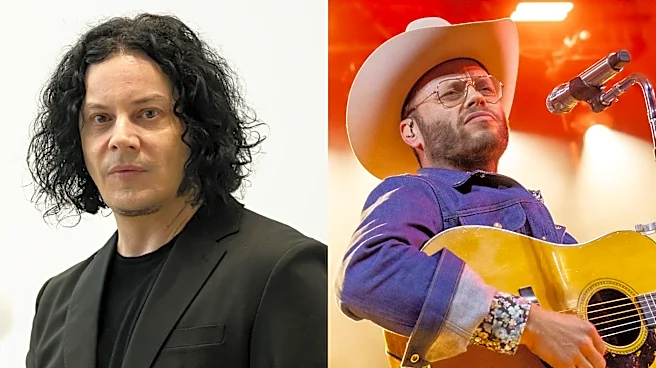
Charley Crockett has publicly responded to Jack White regarding the controversy surrounding Twin Temple's removal from Crockett's tour dates. Crockett claims that Twin Temple fabricated the reason for their removal, stating it was not due to their Satanic
imagery but rather other production issues. He alleges that Twin Temple used the situation to promote their new album and that White's subsequent support for the band amounted to 'dog whistling' about religious and creative freedom. White, in turn, addressed Crockett's accusations by quoting lyrics from the 1984 rap song 'Rapping Duke,' and clarified that he is not a practicing Catholic and does not fear Satanic imagery, advocating for individual spiritual paths. Crockett's initial social media posts on the matter were later deleted, but he reiterated his stance, questioning White's past views on media and suggesting hypocrisy.
Why It's Important?
This public dispute highlights the complexities and potential pitfalls of artist-to-artist interactions, especially when involving sensitive topics like religious imagery and creative freedom within the music industry. The incident underscores how quickly narratives can form and spread through social media, potentially impacting artists' reputations and careers. For smaller, independent artists like Twin Temple, gaining support from established figures like Jack White can be a significant boost, but it also risks drawing them into larger public disagreements. The exchange also touches upon broader themes of media interpretation and the authenticity of public statements from musicians, raising questions about how artists navigate their public image and respond to controversies in an increasingly scrutinized environment.
What's Next?
The immediate future will likely see continued public discussion and fan engagement around the statements made by both Charley Crockett and Jack White. Both artists have upcoming tour dates and new music releases, which could provide further platforms for addressing or moving past the controversy. Twin Temple is also scheduled to open for Jack White in Los Angeles, which will undoubtedly draw attention. The incident may prompt other artists and industry figures to consider how they approach similar situations, particularly regarding tour cancellations and public endorsements. The ongoing debate could also influence how fans perceive the authenticity and motivations of artists in their public interactions.
Beyond the Headlines
This dispute delves into the deeper implications of artistic expression, particularly the use of provocative imagery and the boundaries of creative freedom in the music industry. It raises questions about the responsibility of established artists when supporting emerging acts, and the potential for misinterpretation or exploitation of sensitive themes for publicity. The exchange also reflects a broader cultural tension between traditional and unconventional artistic expressions, and how these are received by different audiences and industry figures. Furthermore, the use of social media as a primary battleground for such disagreements underscores the evolving nature of public discourse and conflict resolution in the digital age, where statements can be quickly amplified and scrutinized, often leading to prolonged public debates.