





What's Happening?
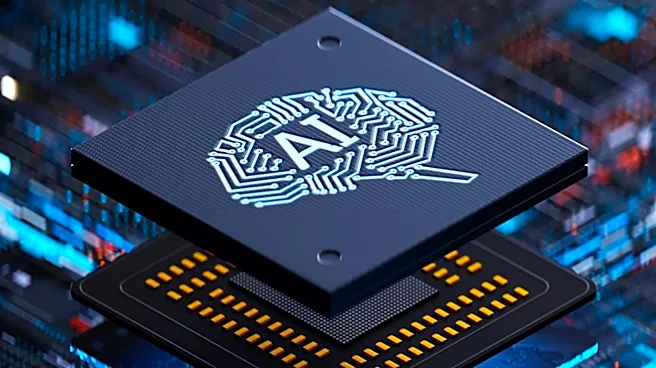
South Korea's semiconductor exports continued their robust growth trajectory in November 2026, driven by the escalating global demand for artificial intelligence (AI) chips. This sustained expansion highlights the critical role South Korean manufacturers
play in supplying the hardware infrastructure essential for the AI revolution across data centers, cloud platforms, and enterprise deployments worldwide. The surge reflects significant investments in AI training clusters and inference infrastructure, with major cloud providers and AI labs actively securing high-bandwidth memory chips, advanced logic processors, and specialized accelerators produced by South Korean foundries. Orders for next-generation memory architectures have increased by 40 percent year-over-year, with no indications of demand slowing down through early 2027. South Korean chipmakers have invested billions to expand fabrication capacity, bringing new production lines for high-bandwidth memory and advanced packaging technologies online throughout 2026 to meet these demands.
Why It's Important?
The sustained boom in South Korea's semiconductor exports is crucial for the global AI industry, providing supply assurance for AI developers and infrastructure operators as AI model complexity and deployment scale increase. This growth validates industry forecasts that position AI as the primary driver for advanced semiconductor demand for the remainder of the decade. For organizations planning AI infrastructure investments, the rising production capacity from Korean manufacturers suggests competitive pricing dynamics. The geopolitical dimensions of semiconductor leadership are also highlighted, as nations prioritize domestic chip production while recognizing the interdependence with established manufacturing hubs like South Korea. The country's expertise in memory technologies and advanced node fabrication processes is vital for the demanding requirements of AI workloads.
What's Next?
Analysts project that the AI chip boom will sustain South Korea's export strength well into 2027. Emerging applications in autonomous systems, scientific computing, and edge AI devices are expected to create new demand vectors beyond traditional data center markets. The convergence of AI model scaling laws and hardware efficiency improvements indicates that semiconductor innovation will remain both a bottleneck and an opportunity. South Korean manufacturers are likely to continue expanding their production capabilities to meet the increasing global requirements for AI hardware. The competitive landscape, including rivalry with manufacturers in Taiwan and the United States, will likely intensify as each vies for market share in specialized AI accelerators, potentially leading to further technological advancements and diversified supply chains.
Beyond the Headlines
The continuous surge in demand for AI chips underscores a fundamental shift in the global technological landscape, where AI is not just an application but a foundational technology driving economic growth and innovation. This trend has broader implications for national security and economic policy, as countries increasingly view semiconductor manufacturing capabilities as strategic assets. The reliance on a few key manufacturing hubs, such as South Korea, for advanced chips also highlights potential vulnerabilities in the global supply chain, prompting efforts towards diversification and localized production. Furthermore, the rapid advancements in AI hardware are pushing the boundaries of computing, leading to new research and development in materials science, chip architecture, and energy efficiency, which will have long-term impacts on various industries and technological progress.