




What's Happening?
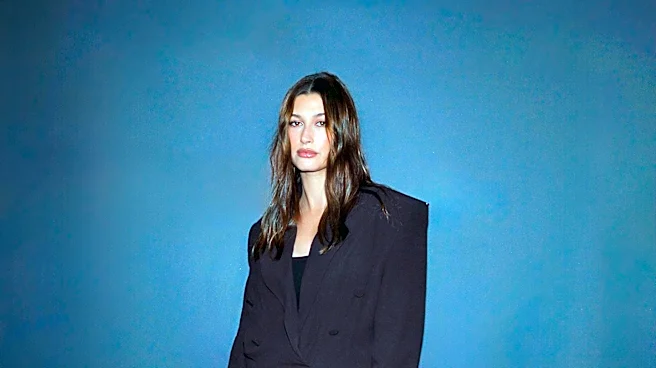
Kendall Jenner and Hailey Bieber were recently seen in West Hollywood, embracing '90s-inspired minimalist fashion during a dinner outing. The two celebrities, photographed leaving Sushi Park, showcased sleek looks characterized by clean silhouettes, dark
colors, and carefully selected accessories. Hailey Bieber opted for an all-black ensemble, featuring a fitted spaghetti-strap camisole, dark trousers, and narrow black sunglasses, which added a distinct retro touch. Kendall Jenner, on the other hand, paired a fitted black top with a navy skirt and flat mules, complemented by a tan shoulder bag. Both outfits emphasized understated elegance, with accessories playing a crucial role in defining their individual styles. Their appearance highlights a current trend in celebrity fashion that draws heavily from the minimalist aesthetics of the 1990s, focusing on simplicity and subtle detailing rather than elaborate layering or bright colors.
Why It's Important?
This celebrity endorsement of '90s minimalist style is significant as it often influences broader fashion trends and consumer behavior in the U.S. The choices made by figures like Kendall Jenner and Hailey Bieber can quickly translate into mainstream fashion, affecting retail sales, design trends, and the overall aesthetic preferences of consumers. The emphasis on timeless pieces, dark colors, and clean lines suggests a potential shift away from more flamboyant or transient fashion trends towards a more classic and sustainable approach to dressing. This could impact the fashion industry by encouraging brands to produce more versatile and enduring garments, potentially influencing supply chains and marketing strategies. For consumers, it might mean a renewed interest in investing in quality staples and a move towards a more curated wardrobe, reflecting a desire for sophistication and practicality in everyday wear.
What's Next?
The continued visibility of '90s minimalist fashion among high-profile individuals like Jenner and Bieber suggests that this aesthetic will likely gain further traction in the coming seasons. Fashion retailers and designers are expected to respond by incorporating more minimalist elements, such as sleek silhouettes, monochromatic palettes, and retro accessories, into their upcoming collections. We may see an increase in the availability of items like fitted camisoles, wide-leg trousers, and narrow sunglasses in stores. This trend could also lead to a resurgence of interest in vintage fashion, as consumers seek authentic '90s pieces. Additionally, fashion publications and social media influencers will likely continue to feature and promote this style, further solidifying its presence in the contemporary fashion landscape and influencing how Americans dress for various occasions.
Beyond the Headlines
The resurgence of '90s minimalist fashion goes beyond mere aesthetics; it reflects a broader cultural inclination towards simplicity and a rejection of overt consumerism. In an era often characterized by fast fashion and fleeting trends, the return to minimalist styles can be seen as a desire for authenticity and longevity in personal expression. This trend might also be interpreted as a nostalgic longing for a perceived simpler time, offering a sense of comfort and familiarity amidst rapid societal changes. Ethically, it could promote more conscious consumption by encouraging individuals to invest in fewer, higher-quality pieces that transcend seasonal fads. Culturally, it reinforces the cyclical nature of fashion, demonstrating how past styles are continually reinterpreted and given new meaning by contemporary icons, shaping collective identity and taste.