

What's Happening?
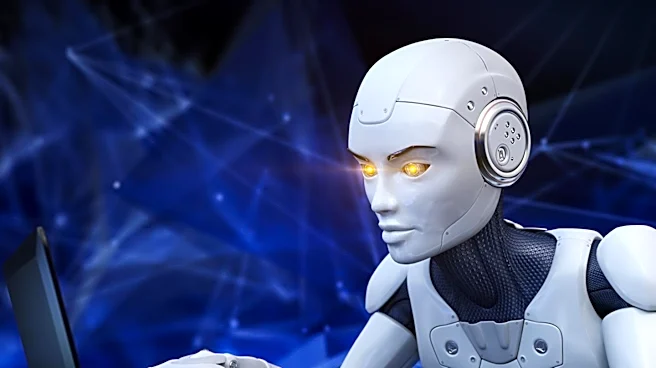
Artificial intelligence is significantly reshaping 3D design workflows, offering tools that accelerate various stages from concept development to rendering. AI-powered software like Meshy, Tripo AI, Luma AI, and D5 Render can generate initial concepts,
3D models, textures, and assist in post-production tasks such as denoising and upscaling. These tools enable faster ideation, rapid prototyping, and more efficient asset creation, making 3D design more accessible to non-experts. For instance, AI rendering software is particularly useful in architectural visualization for generating early-stage concepts for interior and exterior designs, and for quickly visualizing furniture layouts. However, despite these advancements, AI rendering software often falls short in replicating the depth, originality, and intent of human experience. Commercial projects, in particular, require precise geometry, consistent branding, creative direction, and client-specific revisions, areas where AI tools currently lack the necessary nuance and judgment.
Why It's Important?
This transformation is critical for U.S. industries reliant on 3D visualization, including architecture, real estate, product design, and entertainment. AI's ability to automate repetitive tasks and accelerate concept development can lead to significant cost savings and faster project turnaround times. This efficiency can boost productivity and competitiveness for businesses. However, the limitations of AI highlight the irreplaceable value of human 3D artists. While AI can generate visuals, it struggles with interpreting subtle brand guidelines, translating abstract concepts into engaging visuals, and maintaining creative direction and storytelling. The need for human judgment in quality control, client-specific requirements, and ensuring technical accuracy means that AI is more of a co-pilot than a replacement for artists. This dynamic emphasizes a hybrid approach where AI handles the heavy lifting of automation, while human artists provide the strategic insight, emotional nuance, and precision required for professional, client-ready results.
What's Next?
The future of 3D design will likely see a continued evolution of hybrid workflows, where AI tools become more sophisticated in assisting artists rather than replacing them. Developers will focus on improving AI's capabilities in areas where it currently falls short, such as handling complex geometry, achieving photorealistic lighting, and understanding nuanced creative briefs. Training data for AI models will need to become more diverse and ethically sourced to mitigate intellectual property risks and biases. 3D artists will need to adapt by integrating AI tools into their skill sets, focusing on higher-level tasks like art direction, client communication, and ensuring brand consistency. Educational institutions will also need to update their curricula to prepare future artists for this AI-augmented landscape. The industry will likely see new roles emerge that specialize in managing and optimizing AI-powered design pipelines, bridging the gap between technology and creative vision.
Beyond the Headlines
The integration of AI into 3D design raises profound questions about creativity, intellectual property, and the future of artistic professions. While AI can generate vast numbers of variations, the essence of human creativity—the ability to imbue work with emotion, narrative, and unique vision—remains distinct. The ethical implications of AI-generated content, particularly concerning copyright and originality, are becoming increasingly pressing. As AI models are trained on existing human-created data, the question of ownership and fair compensation for original artists will need to be addressed. Furthermore, the reliance on AI for initial concepts could lead to a homogenization of design aesthetics if not carefully managed, potentially stifling true innovation. The challenge lies in harnessing AI's power to enhance human creativity and efficiency without diminishing the unique contributions of human artists or compromising the ethical foundations of creative work.