




What's Happening?
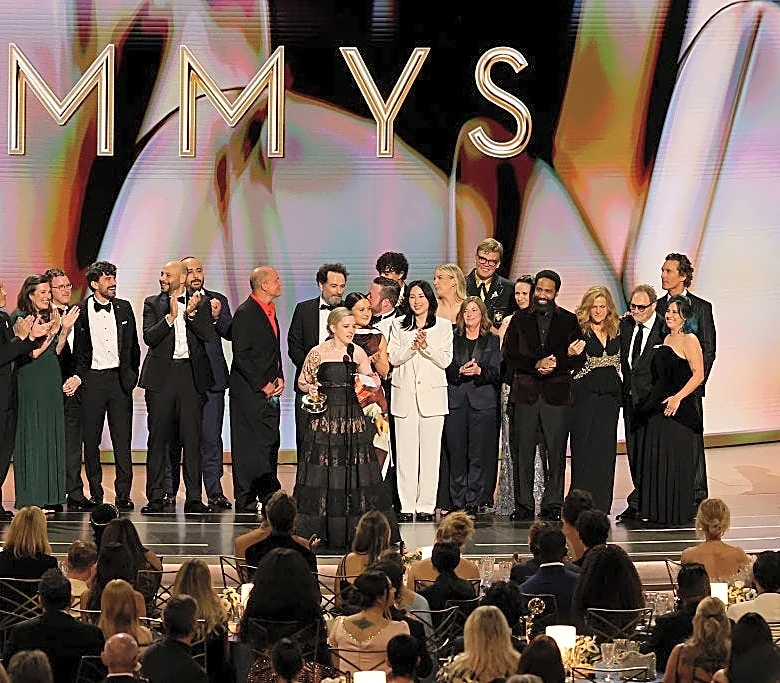
The Television Academy has announced significant changes to the 2026 Emmy Awards telecast, reducing the number of televised categories from 25 to 19. This decision, attributed to 'limited time' within the three-hour broadcast, will see five categories moved
to the Creative Arts Emmys ceremonies held the week prior. These categories include Writing for a Variety Series, Supporting Actor and Actress in a Limited Series or Movie, Directing for a Limited Series or Movie, and Writing for a Limited Series or Movie. Additionally, the Academy combined Outstanding Talk Series and Outstanding Scripted Variety Series into a single Outstanding Variety Series category. The move has drawn strong condemnation from major industry guilds. The Directors Guild of America, the Writers Guild of America, and SAG-AFTRA issued a joint statement asserting that 'The decision to eliminate these categories from the prime-time broadcast devalues the contributions of the talented people the Academy is meant to honor.' They emphasized that an awards show dedicated to recognizing excellence should not reduce recognition for the artists whose work gives it meaning. The 2026 Emmy Awards are scheduled to air live on September 14 at 8 p.m. ET/5 p.m. PT on NBC.
Why It's Important?
The Television Academy's decision to reduce televised Emmy categories carries significant implications for the entertainment industry, particularly for the recognition and visibility of creative professionals. By moving several key writing, directing, and acting categories to the Creative Arts Emmys, the Academy risks diminishing the perceived importance of these crafts in the eyes of the public and within the industry itself. The joint condemnation from major guilds—DGA, WGA, and SAG-AFTRA—underscores the deep concern among creators that their work is being devalued. This move could impact career trajectories for artists in these categories, as a prime-time televised win often provides a substantial boost in recognition, opportunities, and negotiating power. Furthermore, it could influence how networks and studios perceive the prestige associated with these awards, potentially affecting future investment in diverse and specialized programming. The controversy highlights an ongoing tension between the desire for a streamlined, audience-friendly broadcast and the fundamental purpose of awards shows to celebrate the full spectrum of artistic achievement in television.
What's Next?
The immediate consequence of the Emmy Awards' category reduction will be observed during the September 14, 2026 telecast, where the absence of certain awards will be notable. The industry will closely watch the viewership numbers and critical reception of the streamlined show to assess the impact of these changes. It is likely that the guilds will continue to advocate for the reinstatement of these categories to the main broadcast in future years, potentially leading to ongoing negotiations with the Television Academy. This situation could also prompt other awards ceremonies to re-evaluate their own broadcast formats and category inclusions, as they balance audience engagement with comprehensive artistic recognition. Furthermore, there may be increased attention and viewership directed towards the Creative Arts Emmys, as industry professionals and dedicated fans seek to acknowledge the winners in the categories no longer featured on the main show. The long-term implications could include a re-evaluation of the Emmy Awards' structure and purpose, potentially leading to broader discussions about how best to honor the vast array of talent in the television industry.
Beyond the Headlines
The controversy surrounding the Emmy category reductions points to a deeper struggle within the awards industry: balancing commercial viability with artistic integrity. In an era of declining traditional television viewership and increasing competition for audience attention, awards shows are under pressure to deliver engaging, fast-paced broadcasts. However, this often comes at the expense of recognizing the full breadth of creative contributions. The decision to de-emphasize categories like writing and directing for limited series, or supporting acting roles, inadvertently suggests a hierarchy of creative importance, which can be demoralizing for those working in these critical fields. This situation also raises questions about the future of specialized craft awards in mainstream broadcasts and whether the industry is moving towards a model where only the most 'telegenic' or broadly appealing categories receive prime-time attention. The ethical dimension lies in whether an awards body, whose stated mission is to honor excellence, can justify reducing the visibility of certain forms of excellence for the sake of broadcast efficiency, potentially undermining the very artists it aims to celebrate.