





What's Happening?
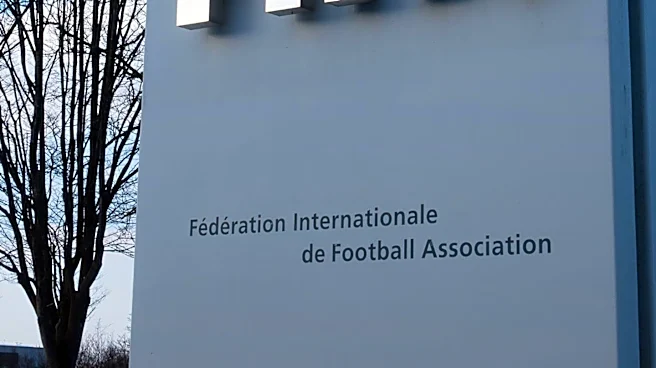
On November 12, 2026, Judge Jeannette Vargas in Manhattan ruled against FIFA's U.S. subsidiaries, refusing their request to intervene in UEFA's application for evidence under Section 1782. UEFA is seeking documents and testimony from Thrive Capital and Joshua
Kushner regarding an abandoned FIFA World Cup investor plan. Judge Vargas determined that FIFA's U.S. subsidiaries lacked a 'direct, substantial and legally protectable interest' in the application. This ruling does not compel FIFA to hand over documents immediately, as the court has yet to decide on UEFA's main application for evidence. UEFA intends to use this evidence for a contemplated criminal complaint in Switzerland against FIFA president Gianni Infantino and potentially other officials, alleging criminal mismanagement.
Why It's Important?
This ruling is significant for international sports governance and legal precedent, particularly concerning the use of U.S. courts for evidence gathering in foreign proceedings. The decision clarifies the scope of intervention rights for entities not directly targeted by a Section 1782 application. For UEFA, it clears a procedural hurdle in its pursuit of evidence, potentially strengthening its case against FIFA officials. For FIFA, while not a direct order to produce documents, it signals that its U.S. subsidiaries cannot easily block such evidence requests. This case highlights the increasing trend of international bodies utilizing U.S. legal mechanisms to address disputes and alleged wrongdoings occurring abroad, impacting how global organizations operate and are held accountable.
What's Next?
The next step in this case is for the New York court to rule on UEFA's primary application for evidence. If granted, UEFA can then issue subpoenas to Thrive Capital and Joshua Kushner, who would have the opportunity to challenge these subpoenas. Separate applications by UEFA against JPMorgan, FIFA's U.S. subsidiaries, and Greg Maffei are also pending in New York, Florida, and Colorado, indicating a multi-front legal battle. The evidence, if obtained, would be presented to Swiss prosecutors, who would then decide whether to pursue criminal charges against FIFA president Gianni Infantino. This legal process could have significant implications for Infantino's position, especially with the FIFA election approaching in March.
Beyond the Headlines
This case delves into the complex interplay between international sports politics, corporate finance, and legal jurisdiction. The use of Section 1782 by UEFA to gather evidence in the U.S. for a potential Swiss criminal complaint underscores the global reach of U.S. legal tools and the challenges of regulating international organizations like FIFA. It also brings to light the financial dealings and governance structures within major sports bodies, raising questions about transparency and accountability. The abandoned FIFA World Cup investor plan, which involved selling commercial rights to private investors, highlights the immense financial stakes in global sports and the potential for conflicts of interest. This legal battle could set precedents for how international sports federations are scrutinized and held accountable for their financial decisions and leadership.