






What's Happening?
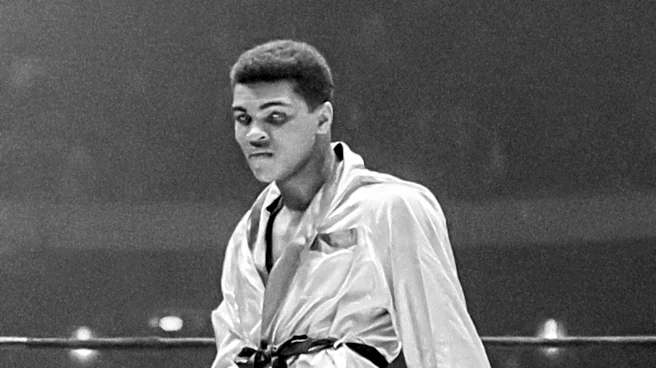
A comprehensive overview of Muhammad Ali's life and career highlights his journey from Cassius Clay to a global icon. Born in Louisville, Kentucky, in 1942, Ali began boxing at age 12 and quickly rose through the amateur ranks, securing an Olympic gold
medal in Rome in 1960. His professional career saw him become the first three-time world heavyweight champion, with a record of 56 wins and 5 losses. Key moments include his upset victory over Sonny Liston in 1964, his refusal to be drafted into the U.S. Army during the Vietnam War in 1967, which led to a three-and-a-half-year ban from boxing, and his legendary fights such as the 'Fight of the Century' against Joe Frazier, the 'Rumble in the Jungle' against George Foreman, and the 'Thrilla in Manila' against Frazier. Ali's boxing style, characterized by his speed and agility, was famously described as 'float like a butterfly, sting like a bee.' Beyond the ring, he was a prominent figure in the Civil Rights Movement and a convert to Islam, advocating for peace and justice.
Why It's Important?
Muhammad Ali's impact extends far beyond the sport of boxing, making him a significant figure in U.S. history and culture. His principled stand against the Vietnam War, rooted in his religious beliefs and moral convictions, challenged the prevailing political climate of the 1960s and inspired anti-war movements. This act of defiance, despite costing him his boxing title and career for several years, cemented his legacy as an advocate for civil liberties and a symbol of resistance. His conversion to Islam and his outspokenness on racial injustice also made him a powerful voice for African Americans during a tumultuous period. Ali's ability to captivate audiences both inside and outside the ring, coupled with his charisma and articulate expression, transformed him into a cultural icon whose influence is still felt today. He demonstrated that athletes could be powerful agents of social change, using their platforms to address broader societal issues.
What's Next?
While Muhammad Ali passed away in 2016, his legacy continues to be celebrated and studied. Institutions like the Muhammad Ali Center in Louisville, Kentucky, serve as ongoing educational and cultural hubs dedicated to his life and the values he championed. Documentaries, films, and books continue to explore various facets of his career and personal life, ensuring that future generations understand his contributions to sports and society. His story remains a touchstone for discussions on athletic activism, religious freedom, and racial equality. The ongoing recognition of his achievements and principles suggests that his influence will persist, inspiring new generations to stand up for their beliefs and strive for social justice.
Beyond the Headlines
Muhammad Ali's life offers profound insights into the intersection of sports, politics, and identity. His decision to change his name from Cassius Clay, which he considered a 'slave name,' to Muhammad Ali, reflected a powerful assertion of self-determination and cultural pride. This act, initially met with resistance from many journalists and the public, highlighted the deep-seated racial tensions and identity struggles prevalent in the U.S. during the mid-20th century. Furthermore, his later diagnosis with Parkinson's syndrome, believed by many doctors to be linked to the cumulative impact of boxing, brought attention to the long-term health risks faced by athletes in contact sports. Ali's journey from a controversial figure to a universally revered humanitarian underscores the evolving nature of public perception and the enduring power of moral courage.