




What's Happening?
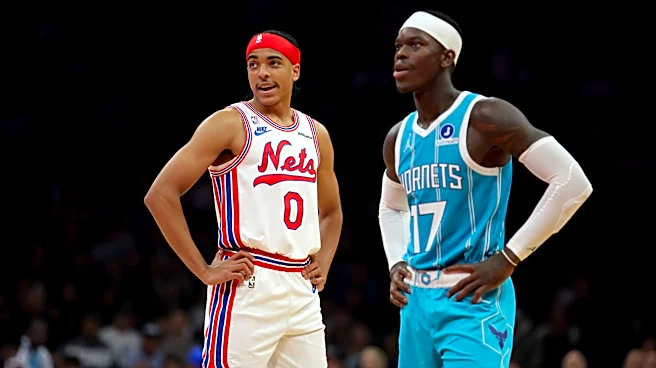
Jaden Ivey, who was selected as the fifth overall pick in the 2022 NBA Draft, did not secure a second contract. This information comes in the context of a discussion about the increasing pressure on top draft picks to prove their worth quickly in the NBA.
The article highlights that the grace period for guards drafted high in the league has significantly shortened. Other examples cited include Johnny Davis, drafted tenth in 2022 and out of the league by 2025, and Rob Dillingham, drafted eighth in 2024, whose NBA career may have concluded after just two seasons. This trend suggests a more immediate expectation for performance from young players entering the league.
Why It's Important?
The inability of a fifth overall pick like Jaden Ivey to secure a second contract underscores a significant shift in the NBA's approach to player development and team building. This trend indicates that teams are less willing to invest long-term in players who do not demonstrate consistent high-level performance early in their careers. For players, this means increased pressure to perform immediately, potentially altering training and playing strategies. For teams, it reflects a more cutthroat business model where draft picks are expected to contribute significantly and quickly, impacting roster construction and salary cap management. This could lead to a higher turnover rate for young players and a greater emphasis on 'win-now' mentalities across the league.
What's Next?
This development suggests a continued trend where NBA teams will likely prioritize immediate impact and consistent performance from their draft selections. Future draft classes may face even greater scrutiny and shorter timelines to prove their value. Players entering the league will need to adapt quickly to the professional environment and demonstrate their capabilities to secure long-term contracts. This could also influence scouting and drafting strategies, with teams potentially favoring more 'NBA-ready' prospects over those with higher long-term potential but requiring more development time. The financial implications for players who don't secure second contracts are substantial, potentially leading to shorter careers or transitions to other leagues.
Beyond the Headlines
The trend of top draft picks failing to secure second contracts raises questions about the long-term sustainability of player careers and the psychological toll on young athletes. The immense pressure to perform at an elite level from day one can impact mental health and overall well-being. Ethically, it prompts a discussion about the balance between a team's financial investment and its responsibility to player development. Culturally, it reinforces a 'results-driven' narrative in professional sports, where potential is quickly overshadowed by immediate output. This shift could also lead to a more transient player pool, making it harder for fans to connect with and follow the careers of young talents over extended periods.