








What's Happening?
The National Retail Federation (NRF) and Hackett Associates report that U.S. import volumes are set to reach record highs in July 2026, as shippers accelerate imports ahead of expected tariff increases. The temporary 10% Section 122 tariffs, set to expire
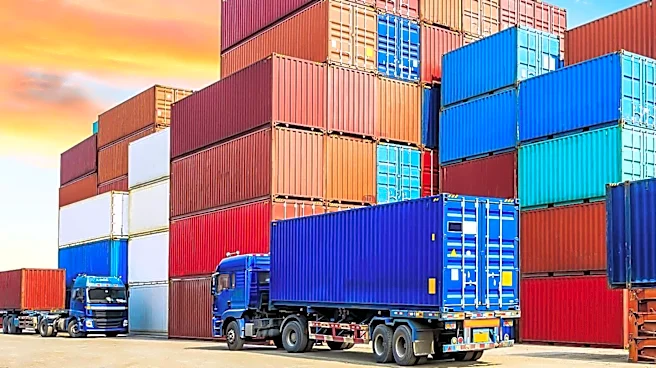
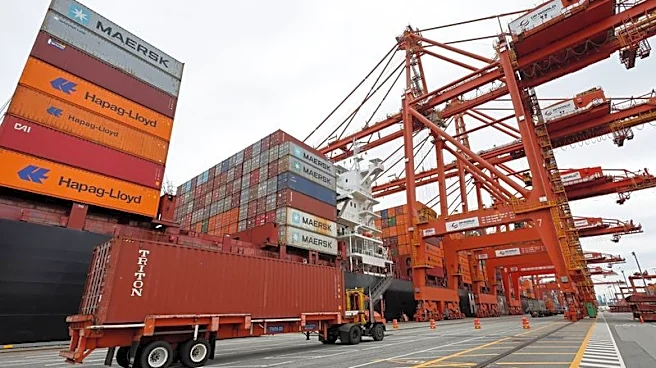
on July 24, have prompted a rush to import goods before new tariffs related to forced labor are introduced in August. This early peak in shipping activity is part of a broader trend where the traditional peak season has shifted earlier due to trade uncertainties and port labor disputes. The report highlights that import volumes for May through July are projected to be the highest in 2026, with significant increases in cargo handled by major U.S. ports.
Why It's Important?
The anticipated tariff hikes are causing significant shifts in supply chain strategies, with businesses frontloading imports to avoid potential cost increases. This behavior reflects broader economic concerns, including geopolitical tensions and fluctuating energy prices, which are impacting consumer spending and business operations. The logistics industry is experiencing increased demand, leading to higher shipping costs and capacity challenges. The situation underscores the importance of stable trade policies and the potential for policy changes to disrupt global supply chains, affecting both businesses and consumers.
What's Next?
As the expiration of current tariffs approaches, businesses will need to adapt to the new trade environment. Retailers may face increased pressure to adjust pricing strategies, potentially affecting consumer spending during key shopping seasons. The logistics industry will continue to play a critical role in managing these changes, with potential implications for shipping rates and capacity. Policymakers and industry leaders will need to monitor the situation closely to mitigate any negative impacts on the economy.