
What's Happening?
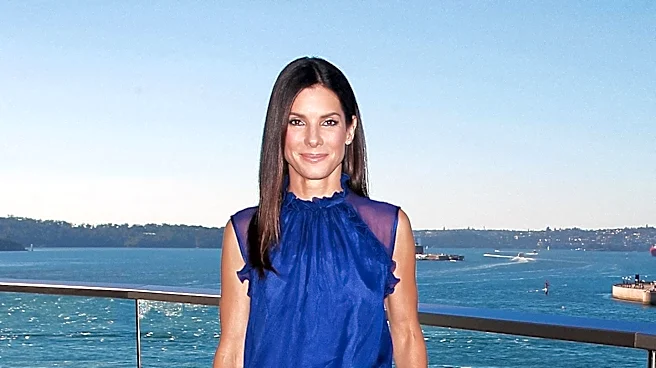
Actress Sandra Bullock has publicly discussed for the first time the three-year battle her late partner, Bryan Randall, had with Amyotrophic Lateral Sclerosis (ALS). Randall passed away in 2023 at the age
of 57. Bullock shared details during an interview on the 'Smartless' podcast, revealing that Randall had requested his diagnosis be kept private, which led to her feeling isolated during his treatment. She explained that Randall was diagnosed during the COVID-19 pandemic, further complicating the situation as she also had to protect one of her children with severe asthma. Bullock described the extensive process of Randall's diagnosis, which took over a year, and her efforts to find trial drugs for him. She also spoke about the emotional toll it took on her and her children, Louis and Laila, who viewed Randall as a father figure.
Why It's Important?
Sandra Bullock's candid revelation sheds light on the profound challenges faced by families dealing with ALS, a devastating neurodegenerative disease. Her experience highlights the emotional and practical difficulties of caring for a loved one with a terminal illness, especially when the diagnosis is kept private. The isolation she felt, exacerbated by the pandemic, underscores the need for support systems for caregivers. Furthermore, her discussion about explaining Randall's condition to her children emphasizes the complex psychological impact on families, particularly on young children who are losing a parental figure. This story brings attention to ALS, potentially increasing public awareness and empathy for those affected by the disease and their caregivers, while also illustrating the personal sacrifices made by public figures behind the scenes.
What's Next?
Bullock's decision to share her story may encourage more open conversations about ALS and the importance of caregiver support. Her experience could inspire other individuals and families facing similar private battles to seek help and connect with support networks. The discussion about the mental health aspects coupled with physical illness in ALS patients, as highlighted by Bullock, could also prompt further advocacy for comprehensive care that addresses both physical and psychological needs. While Bullock has found some relief in sharing her story, her journey of grieving and healing continues, and her public platform may now serve as a voice for others navigating similar losses and caregiving responsibilities.
Beyond the Headlines
Beyond the immediate impact of Bullock's personal story, her experience touches upon broader societal issues regarding privacy in illness, the burden on caregivers, and the emotional resilience required in the face of terminal diagnoses. Randall's choice to keep his illness private raises questions about individual autonomy versus the need for communal support during times of crisis. Bullock's description of 'grieving Bryan four years before he passed' illustrates anticipatory grief, a complex psychological process often experienced by caregivers of those with progressive illnesses. Her reflection on 'guilt' as a mother and the subsequent realization that children 'choose this journey' offers a profound perspective on coping with loss and finding meaning in difficult experiences, potentially resonating with many who have faced similar family challenges.