




What's Happening?
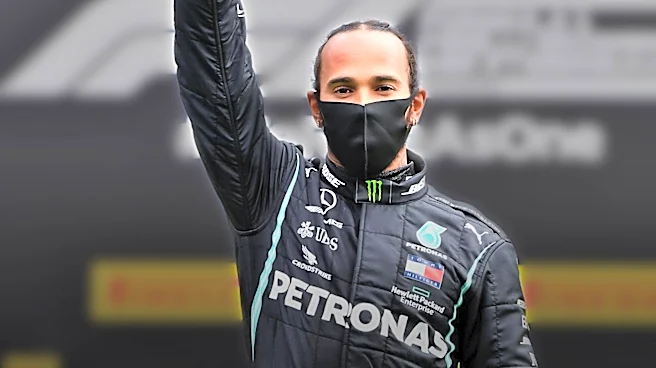
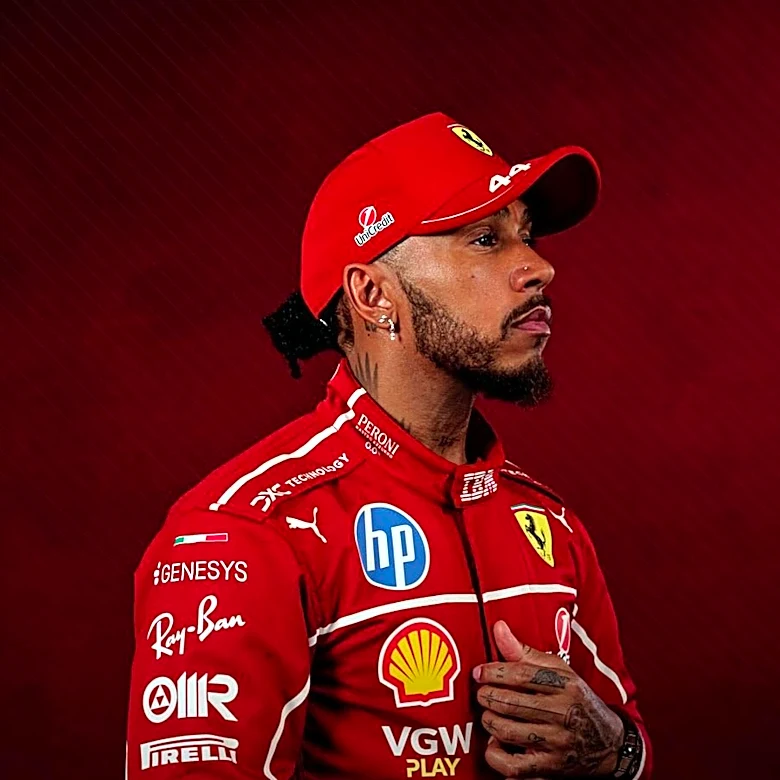
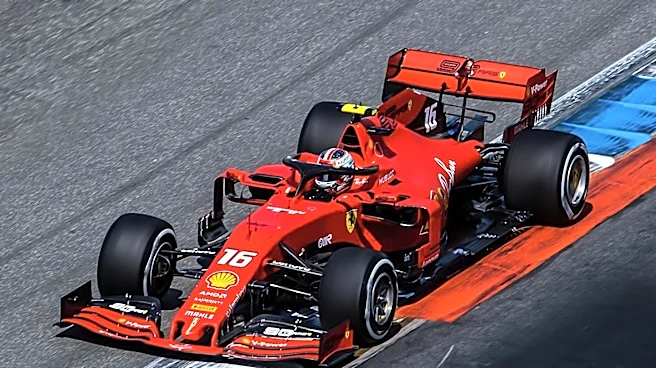
Max Verstappen, the Red Bull driver, has voiced his disapproval of Ferrari's strategy of maintaining two 'number one' drivers, specifically referencing the on-track incident between Lewis Hamilton and Charles Leclerc at the Mexico City Grand Prix. Verstappen stated
that if he were a team principal, he would never pair two top drivers, arguing that such an approach leads to conflicts and compromises team results. He believes a clear hierarchy would have prevented Ferrari from losing a potential 1-2 finish in Mexico, where both Hamilton and Leclerc ran wide, allowing Verstappen to secure the win. Despite this, Ferrari team principal Fred Vasseur has confirmed that the team's guidelines remain unchanged, with both drivers continuing to race as equals.
Why It's Important?
Verstappen's critique highlights a fundamental debate in Formula 1 team management: the balance between fostering internal competition and maximizing team points. His perspective, rooted in his own experience and success, suggests that a clear driver hierarchy can be more effective for overall team performance. For Ferrari, maintaining an equal-status approach, despite incidents like the one in Mexico, carries significant risks. While it might motivate both drivers, it can also lead to lost opportunities, reduced points, and internal friction, potentially jeopardizing their championship aspirations. This strategic decision by Ferrari will be closely watched, as it could determine their competitiveness against rivals like Red Bull, who often employ a more defined team structure.
What's Next?
Despite Max Verstappen's strong opinion, Ferrari team principal Fred Vasseur has reiterated that the team's policy of equal status for Lewis Hamilton and Charles Leclerc will continue. This means that future races are likely to see similar competitive dynamics between the two drivers, potentially leading to further on-track clashes or strategic compromises. The challenge for Ferrari will be to manage this internal competition effectively, ensuring it does not consistently detract from their overall points haul. Observers will be keen to see if Ferrari's approach yields championship success or if the perceived 'mistake' of having two number one drivers continues to cost them valuable points and opportunities.
Beyond the Headlines
Max Verstappen's comments on Ferrari's driver strategy delve into the complex psychology of elite sports teams and the inherent tension between individual ambition and collective success. His argument for a clear hierarchy reflects a pragmatic, results-oriented approach, prioritizing team points over individual driver parity. This perspective raises questions about the long-term sustainability of 'equal status' policies in highly competitive environments. While such policies can be seen as fair, they might inadvertently create scenarios where individual drivers, driven by their own championship aspirations, make decisions that are not optimal for the team. This debate extends beyond Formula 1, touching upon leadership, team building, and performance optimization in any high-stakes, competitive field.