


What's Happening?
The historic city of Veracruz, Mexico, is experiencing a global resurgence of its traditional music genre, son jarocho, with its most famous song, "La Bamba," serving as a cultural anthem. This syncopated, jubilant folk music, a blend of European, Caribbean,
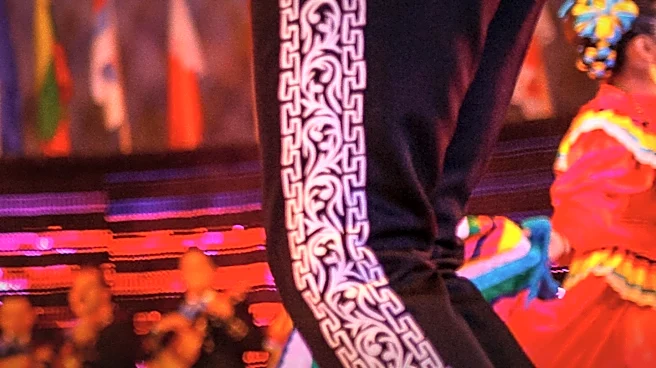
and Indigenous influences, is central to community fiestas known as fandangos. These gatherings, which have been a part of Veracruz culture for over 300 years, involve people playing instruments, singing, and tap dancing (el zapateo) on a wooden platform called a taríma. While son jarocho had seen a decline in popularity in the 1960s and 70s, it is now thriving, with fandangos occurring weekly in Veracruz for various celebrations. The music's popularity has spread internationally, reaching cities with large Latino populations in the U.S., such as Los Angeles and New York, as well as countries across Europe and Asia.
Why It's Important?
The global resurgence of son jarocho music, particularly in U.S. cities with significant Latino populations, highlights the increasing cultural exchange and appreciation for traditional Mexican art forms. This musical genre serves as a powerful cultural bridge, connecting Mexican communities abroad with their heritage and introducing diverse audiences to the rich tapestry of Veracruz's history. The emphasis on community participation in fandangos, where musicians, dancers, and singers come together, fosters a sense of belonging and cultural identity. For the U.S., this trend enriches the multicultural landscape, offering new avenues for artistic expression and community engagement within Latino diasporas. It also demonstrates how traditional music can evolve and find new audiences in a globalized world, challenging the dominance of mainstream music genres and promoting cultural diversity.
What's Next?
The continued spread of son jarocho and fandangos is expected to further solidify its presence in international cultural scenes, especially in the U.S. This growth may lead to increased demand for son jarocho performances, workshops, and cultural events in American cities. Educational institutions and cultural centers might incorporate son jarocho into their programs, fostering a deeper understanding and appreciation of Mexican folk traditions. The involvement of Grammy-winning musicians and renowned luthiers like Tacho Utrera ensures the preservation and evolution of the art form. As more young people, both in Mexico and abroad, embrace son jarocho, its future appears vibrant, promising continued cultural exchange and artistic innovation.
Beyond the Headlines
The revival of son jarocho music reflects a deeper societal yearning for authenticity, originality, and community connection in an increasingly digital and globalized world. The concept of "convivencia," or "alive together," central to fandangos, speaks to a fundamental human need for collective experience and shared cultural identity. In the U.S., where diverse communities often seek ways to maintain and celebrate their heritage, son jarocho offers a powerful medium for cultural expression and intergenerational connection. This movement goes beyond mere entertainment; it is a testament to the resilience of cultural traditions and their capacity to adapt and thrive across borders, fostering a sense of belonging and cultural pride in an ever-changing world.