








What's Happening?
Aston Villa, co-owned by Egyptian billionaire Nassef Sawiris and American businessman Wes Edens through their investment group V Sports, is undertaking a €120 million renovation of its Villa Park stadium. This project, approved by the ownership group which
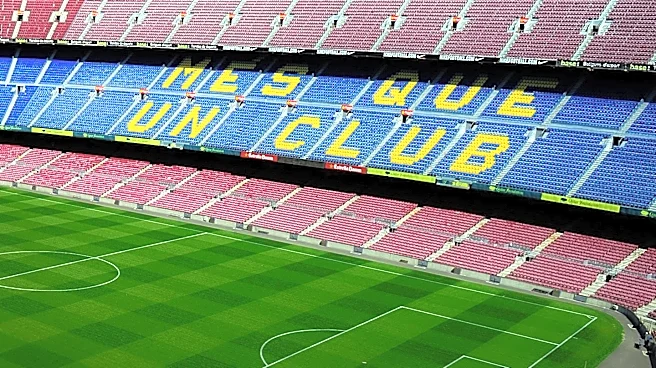
has controlled the club since 2018, primarily focuses on transforming the North Stand. The renovation aims to increase the stadium's capacity from approximately 37,000 to 50,000 spectators within a year. In contrast, FC Barcelona's Spotify Camp Nou transformation is projected to cost €1.8 billion, making Aston Villa's stadium upgrade 15 times less expensive. Despite the significant investment, Villa Park's renovation is considered modest compared to other major English clubs like Tottenham, Liverpool, and Manchester United, which have either built new stadiums or undertaken extensive expansions.
Why It's Important?
This disparity in stadium renovation costs highlights differing financial strategies and market realities between major European football clubs. For U.S. investors like Wes Edens, the Aston Villa project demonstrates a more conservative, targeted investment approach in infrastructure, aiming for incremental growth rather than a complete overhaul. This could reflect a strategic decision to balance financial prudence with competitive aspirations, especially given Aston Villa's recent history of debt. The comparison also underscores the immense financial scale of top-tier European clubs like FC Barcelona, where stadium projects are often multi-billion-euro endeavors driven by global brand appeal and massive revenue generation expectations. This contrast provides valuable insight for U.S. entities considering investments in international sports, illustrating the varied capital requirements and potential returns across different club tiers and leagues.
What's Next?
Upon completion, the Villa Park renovation will increase Aston Villa's matchday revenue and fan capacity, which is crucial for the club's financial health and competitive standing. The expanded stadium will also serve as a venue for the Euro 2028 tournament, further enhancing its profile. However, the relatively modest scale of the renovation suggests that Aston Villa may continue to face challenges in competing with clubs that have invested in larger, more modern facilities. The club's ownership will likely monitor the impact of the increased capacity on revenue and fan engagement to inform future infrastructure decisions. The ongoing financial management, particularly concerning the club's accumulated debt, will remain a key factor in its long-term strategic planning and ability to compete at the highest levels of English and European football.
Beyond the Headlines
The differing approaches to stadium development between Aston Villa and FC Barcelona reflect broader philosophies in sports business: one focused on strategic, incremental improvement within financial constraints, and the other on monumental, transformative projects aimed at maximizing global commercial potential. Aston Villa's decision to renovate rather than rebuild signifies a commitment to its historical ground, Villa Park, which has been its home since 1897. This choice resonates with a segment of football culture that values tradition and heritage over entirely new, often more generic, modern arenas. For U.S. sports franchises, this presents a dichotomy: whether to invest in preserving and upgrading existing, historically significant venues or to pursue entirely new, state-of-the-art facilities. The long-term implications involve balancing fan sentiment, historical identity, and financial viability in an increasingly commercialized sports landscape.