




What's Happening?
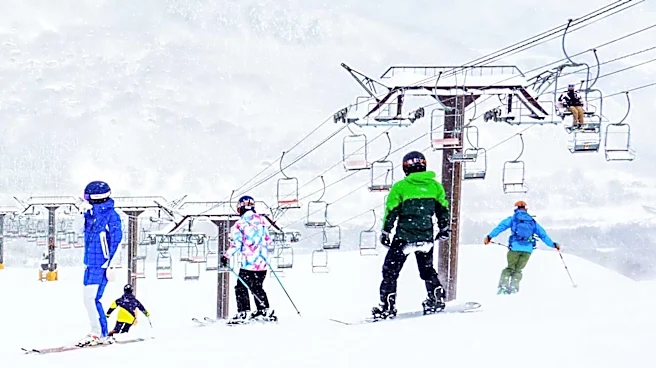
SnowBrains has published a guide outlining seven play-based activities designed to help children prepare for the upcoming ski season. Recognizing that kids may lack the motivation for traditional strength training, the guide emphasizes making fitness
fun. Activities include participating in fall sports like soccer or cross-country, practicing one-foot standing and hopping for balance, and engaging in 'Freeze Dance Songs' to develop balance and gross motor skills. More dynamic exercises such as 'Frog Jumps' and 'Bear Crawls' are suggested to build core, leg, and arm strength, as well as motor coordination. The guide also recommends 'Get Ups'—lying down and standing up repeatedly—to enhance core strength and coordination, particularly for managing falls on the slopes. Finally, trying on ski gear is advised to ensure proper fit and comfort before hitting the snow.
Why It's Important?
This approach to children's ski preparation is important for several reasons. By framing physical conditioning as play, it addresses the common challenge of motivating children for exercise, fostering a positive association with physical activity. The focus on balance, coordination, and core strength directly translates to improved safety and performance on skis, potentially reducing the risk of injuries. For parents, these activities offer practical, accessible ways to engage their children in pre-season conditioning without requiring specialized equipment or advanced training. Ultimately, better-prepared children are likely to have a more enjoyable and successful experience on the mountain, which can encourage continued participation in winter sports and a healthy, active lifestyle.
What's Next?
Parents and guardians can immediately implement these activities to begin preparing their children for the ski season. The guide suggests incorporating these playful exercises into daily routines, making them a fun part of family time. As the ski season approaches, the emphasis can shift towards more specific preparations, such as ensuring all gear fits correctly and practicing getting in and out of skis. Ski resorts and instructors might also consider integrating similar play-based warm-up routines into their pre-lesson activities to further enhance children's readiness and enjoyment. The long-term impact could be a generation of more confident and skilled young skiers, potentially increasing participation rates in winter sports.
Beyond the Headlines
The underlying principle of this guide—integrating physical development with play—has broader implications beyond ski preparation. It highlights the effectiveness of gamified exercise in promoting motor skill development, balance, and strength in children. This method can be applied to various sports and physical activities, suggesting a paradigm shift in how children's fitness is approached. By making exercise enjoyable and less like a chore, it can instill lifelong habits of physical activity, combating issues like sedentary lifestyles and childhood obesity. Furthermore, the emphasis on practical skills like falling and getting up safely underscores a holistic approach to sports readiness, prioritizing fundamental movement patterns over rigid training regimens.