





What's Happening?
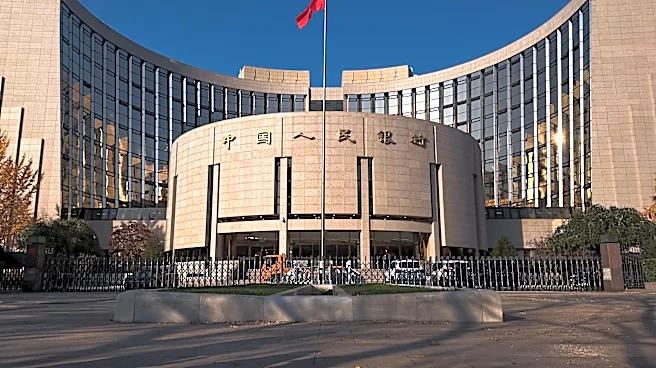
The People's Bank of China (PBOC) has released its China Financial Stability Report (2026), outlining future financial work and acknowledging increasing uncertainties and unpredictable factors in the country's development environment. The report explicitly
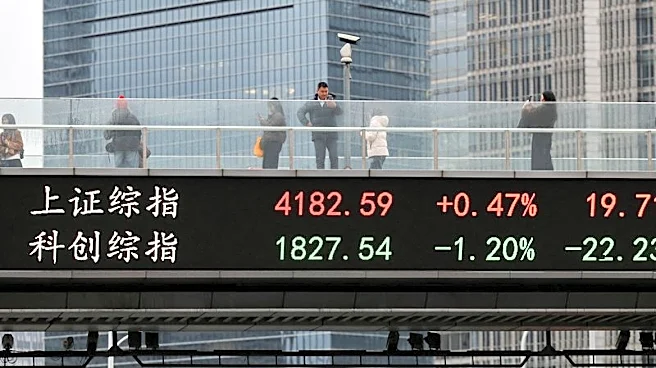
proposes studying the establishment of a mechanism to provide liquidity to non-bank institutions under specific scenarios. This initiative aims to broaden the central bank's role in safeguarding financial market stability beyond traditional banking institutions and offers new policy avenues for supporting the capital market. The PBOC also reiterated its commitment to maintaining a proactive fiscal policy and a moderately loose monetary stance, alongside continuing to utilize existing monetary policy tools that support the capital market. The report assesses China's financial sector as generally stable in 2025, with financial risks contained and financial institution indicators within reasonable ranges. China's GDP reached 140.19 trillion yuan (approximately $21.1 trillion) in 2025, marking a 5% year-on-year growth.
Why It's Important?
This move by the People's Bank of China signifies a potential expansion of central bank intervention and oversight within China's financial system, particularly concerning non-bank institutions. For U.S. and international financial markets, this could indicate a more proactive approach by China to manage systemic risks, which might influence global financial stability. The commitment to ample liquidity and a moderately loose monetary stance suggests China's focus on economic growth and stability, potentially impacting global trade and investment flows. The study of a liquidity mechanism for non-bank institutions could set a precedent for how other major economies address financial stability in an increasingly complex and interconnected global financial landscape. U.S. investors and businesses with exposure to Chinese markets will need to monitor these policy shifts, as they could affect asset valuations, credit availability, and overall market sentiment.
What's Next?
The PBOC plans to accelerate legislative and amendment processes for the Financial Stability Law and the Law of the People's Republic of China on the People's Bank of China, aiming to strengthen the financial stability safeguard system. The integrated PBOC Macroprudential and Financial Stability Committee has already begun operations, and efforts will continue to expand the Deposit Insurance Fund and the Financial Stability Guarantee Fund. The central bank will also focus on enhancing the intrinsic stability of the capital market through improved monitoring, stricter oversight of trading and information disclosure, and robust enforcement against illegal activities. Furthermore, there will be continued efforts to enrich long-term funding channels, launch suitable risk management tools, and foster a market ecosystem that supports long-term investment. Reforms for the STAR Market and ChiNext will advance, and the high-quality integrated development of the Beijing Stock Exchange and NEEQ will be promoted.
Beyond the Headlines
The PBOC's emphasis on extending liquidity support to non-bank institutions highlights a growing recognition of the interconnectedness and potential systemic risks posed by the shadow banking sector and other non-traditional financial entities. This development could lead to a re-evaluation of regulatory frameworks globally, as central banks grapple with how to effectively manage financial stability in an evolving financial ecosystem. The focus on strengthening capital market stability, including measures against excessive speculation and market manipulation, reflects a broader global trend towards tighter financial regulation in the wake of past market volatility. This could also signal a shift towards a more controlled and guided financial market development in China, potentially influencing the behavior of foreign investors and the types of financial products available in the Chinese market. The long-term implications could include a more resilient, albeit potentially less free-wheeling, financial system in China.