




What's Happening?
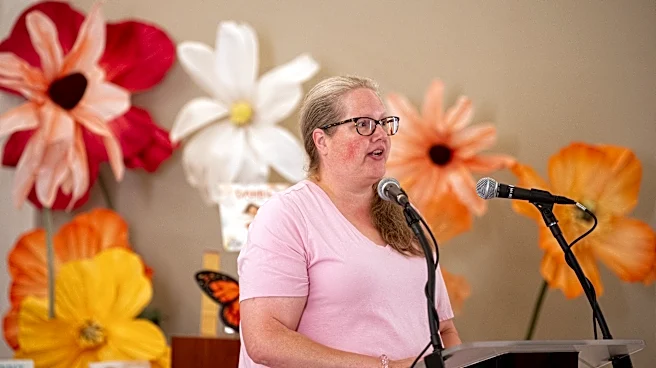
Elissa Minor's upcoming memoir, 'Another Eve: Shame and Desire on the Oregon Coast,' chronicles her journey of leaving the Mormon Church and embracing her identity as a queer woman. The book, set to launch in October by Oregon State University Press,
details Minor's decision in 2005 to depart from the church, a foundational element of her life for generations. Her realization came during her father's brain cancer surgery, prompting her to re-evaluate her own happiness and life choices. Minor, who was baptized, married, and raised her children within the church, and served as president of the women's relief society, found herself massively unhappy and disagreeing with many of its tenets. The memoir also explores her discovery of joy and self-acceptance on the Oregon Coast, where she found a new identity and eventually married her wife, Katie, 25 years after her first temple sealing.
Why It's Important?
Minor's memoir is significant as it sheds light on the personal struggles and profound decisions individuals face when their deeply ingrained religious upbringing conflicts with their authentic identity. Her narrative offers a critical perspective on the Mormon Church's practices, particularly concerning women's roles and the secrecy surrounding temple rituals, which she describes as making women feel replaceable and robbing them of individuality. The book's exploration of anxiety linked to church teachings and the eventual liberation found in self-acceptance and a new community highlights the broader societal impact of religious institutions on personal well-being and identity formation. It also contributes to the growing body of literature by former members of conservative religious groups, providing insight into the challenges of disaffiliation and the search for belonging outside traditional structures.
What's Next?
With the memoir's launch in October, Elissa Minor anticipates potential reactions from her remaining Mormon friends and the wider church community. She acknowledges the church's strict edicts against what it considers 'anti-Mormon literature,' which may deter some friends from reading her book. Minor plans to have conversations with these friends, understanding that the outcome could be uncertain. The publication will likely spark discussions among former and current Mormon members, as well as within LGBTQ+ communities, regarding faith, identity, and personal freedom. The book's release will also contribute to ongoing dialogues about the evolving landscape of religious belief and the increasing visibility of diverse personal narratives within American society.
Beyond the Headlines
Minor's story delves into the complex interplay between religious doctrine, personal identity, and societal expectations. Her experience of being treated as a 'second-class citizen' within the church and the anxiety she attributes to these years highlight the psychological toll that restrictive religious environments can have. The memoir's title, 'Another Eve,' metaphorically critiques the church's perceived homogenization of women, suggesting a loss of individual agency. Her journey to the 'untamed wild' of the Oregon Coast symbolizes a return to a more authentic self, free from the constraints of dogma. This narrative underscores the broader cultural shift towards prioritizing individual authenticity and well-being over traditional institutional adherence, particularly for those whose identities are marginalized within such structures. The book also implicitly raises questions about the role of nature and environment in personal healing and self-discovery.