
What's Happening?
Scientists at VTT Technical Research Centre of Finland have made a significant advancement in developing plastic-free vegan leather using mycelium, the root-like structure of fungi. This new research focuses on a different material formula, processing
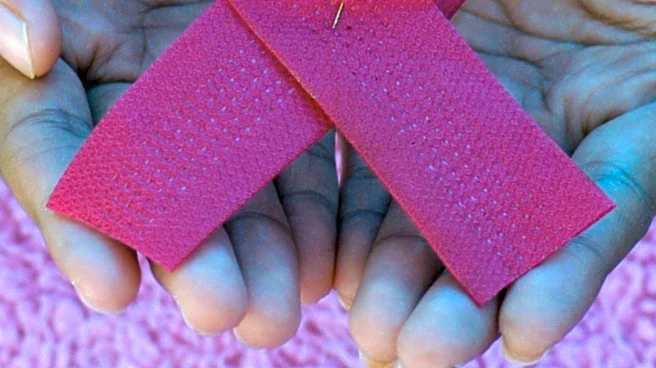
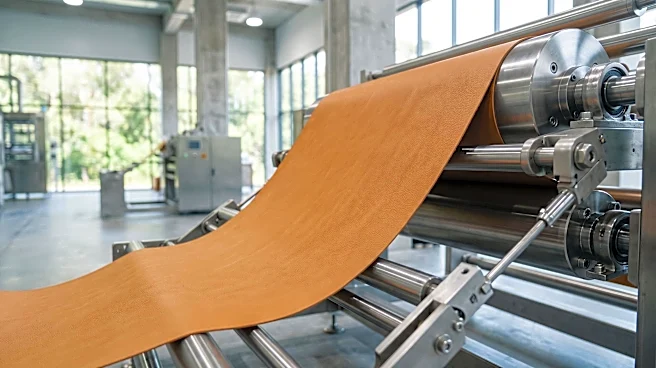
fungal biomass into a thick, pulpy mass grown in a nutrient-rich liquid. This pulp is then harvested, washed, and mixed with sorbitol for softness and cellulose for strength, creating a flexible and durable material. The mixture is spread into a thin layer and dried. The researchers successfully scaled up production using a roller system similar to paper manufacturing, producing mycelium sheets approximately 20 cm (8 inches) wide and 8 meters (26 feet) long. This method leverages existing biotechnology and printing industry equipment, potentially reducing financial barriers to industrial scaling. The material's durability and strength are comparable to traditional leather, and it is easily recyclable, breaking down in water within 28 days and fully disintegrating under industrial composting conditions in six weeks. A prototype handbag has been created using this material.
Why It's Important?
This breakthrough holds significant importance for U.S. industries, particularly in fashion, automotive, and upholstery, by offering a sustainable and ethical alternative to traditional leather and plastic-based synthetics. The environmental impact of animal agriculture, including leather production, is substantial, and plastic-based vegan leathers contribute to plastic pollution. A truly plastic-free, biodegradable, and scalable vegan leather could address these concerns, appealing to environmentally conscious consumers and brands. The ability to produce this material using existing industrial equipment could accelerate its adoption and reduce manufacturing costs, making it a competitive option. This innovation could also stimulate new research and development in biomaterials within the U.S., fostering job creation and economic growth in sustainable manufacturing sectors. Furthermore, it could enhance the U.S.'s position in the global market for eco-friendly products, meeting increasing consumer demand for sustainable goods.
What's Next?
The immediate next step for the VTT researchers is to enhance the material's tear resistance to prepare it for mass production. Once this challenge is overcome, the material could move towards commercialization, potentially through partnerships with U.S. fashion brands, automotive manufacturers, or material suppliers. The use of existing industrial equipment suggests a relatively smoother transition to large-scale manufacturing compared to technologies requiring entirely new infrastructure. We can anticipate further testing and refinement of the material's properties to meet various industry standards. Additionally, there may be efforts to explore different aesthetic possibilities, such as varying textures and colors, to broaden its appeal. The success of this material could also inspire other research institutions and companies in the U.S. to invest further in mycelium-based technologies and other sustainable material innovations.
Beyond the Headlines
Beyond its immediate applications, this development signifies a broader shift towards bio-circular economies and sustainable material science. The ethical implications of animal welfare in traditional leather production and the environmental burden of plastic waste are increasingly pressing global concerns. A viable, scalable, and biodegradable alternative like mycelium leather could fundamentally alter supply chains and consumer expectations across multiple industries. This innovation could also spark a re-evaluation of waste streams, promoting the use of biological resources as valuable inputs for new materials. The integration of biotechnology with traditional manufacturing processes, as demonstrated by VTT, highlights a future where industrial production is more harmonized with natural cycles. This could lead to a paradigm shift in how products are designed, manufactured, consumed, and ultimately disposed of, fostering a more sustainable and regenerative economic model.