









What's Happening?
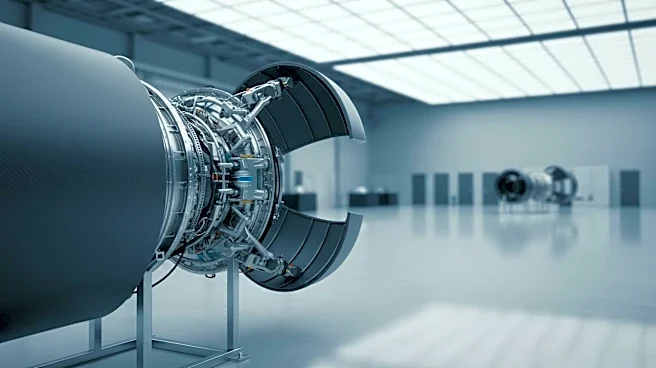
Collins Aerospace is advancing its electric thrust reverser technology, known as elecTRAS, at its engineering center of excellence in Wolverhampton, UK. This development is part of Collins' strategy to provide electric thrust reverser actuation systems
for future single-aisle airliners, building on its success with the Airbus A350. The facility features a modular and scalable test environment that simulates real-world conditions, aiming to reduce certification risks and delays. Collins retained its engineering development capability and production operations for the A350, despite divesting its actuation systems business to Safran. The company is positioning itself as a leader in this technology, which offers potential weight savings and maintenance benefits over traditional systems.
Why It's Important?
The advancement of electric thrust reverser technology by Collins Aerospace represents a significant step in the evolution of aircraft systems. This technology could lead to substantial weight savings, up to 20% of an aircraft's systems, and simplify maintenance and installation processes. As airlines and manufacturers seek more efficient and cost-effective solutions, Collins' elecTRAS could become a key component in next-generation aircraft. The success of this technology on the A350 positions Collins as a competitive player in the aerospace industry, particularly as major manufacturers like Airbus and Boeing consider future narrowbody designs. The development also reflects a broader industry trend towards electrification and sustainability in aviation.
What's Next?
Collins Aerospace is poised to further develop and refine its electric thrust reverser technology at its Wolverhampton facility. While neither Airbus nor Boeing have committed to using elecTRAS on their next-generation narrowbody aircraft, the potential benefits of this technology could influence future design decisions. Collins will likely continue to enhance its testing capabilities and work closely with manufacturers to demonstrate the advantages of electric thrust reversers. The company's focus on innovation and efficiency aligns with the industry's push towards more sustainable aviation solutions, potentially leading to wider adoption of this technology in the coming years.