


What's Happening?
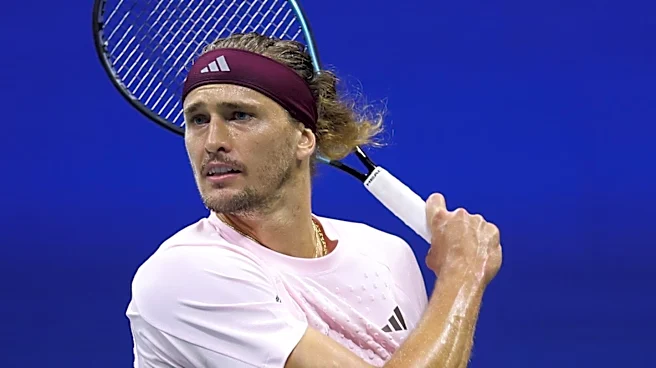
Alexander Zverev, set to become the world No. 1 tennis player on November 2, has voiced strong criticism regarding the current tennis calendar. Speaking in Vienna, Zverev confirmed his participation in the Davis Cup Final 8 in Bologna but ruled out playing
in the United Cup, labeling the overall schedule as 'nonsense.' He stated that playing the Davis Cup this year would extend his season almost into December, making it impossible to then play his first United Cup match at the end of December. Zverev highlighted that he has been expressing concerns about the demanding schedule for a decade without significant changes. He believes the current calendar is moving in the 'wrong direction' for players, leading to increased dissatisfaction and injuries.
Why It's Important?
Zverev's comments underscore a growing concern among top tennis players regarding the physical and mental toll of the sport's demanding schedule. As a prominent figure about to reach the pinnacle of the sport, his public critique could amplify calls for reform within the ATP and ITF. The issue of player burnout and injury, as evidenced by rivals Carlos Alcaraz and Jannik Sinner missing significant portions of the season due to injuries, directly impacts the quality and competitiveness of major tournaments. A revised calendar could lead to healthier athletes, more consistent high-level play, and potentially greater fan engagement, while the current structure risks diminishing the sport's top talent through exhaustion and injury.
What's Next?
Zverev is scheduled to compete in the Davis Cup Final 8 from November 24-29, where Germany will face Great Britain in the quarterfinals. His immediate focus will be on the Vienna semifinals and then the Paris tournament. His decision to skip the United Cup highlights a strategic choice to prioritize rest and physical preparation over additional tournament play. The ongoing discussion about the tennis calendar is likely to continue, with players like Zverev and Alcaraz advocating for a shorter season. While the ATP has made some adjustments for 2026, such as adding a break after Wimbledon and reducing mandatory ATP 500 events, the core issue of a nearly 11-month season remains a point of contention.
Beyond the Headlines
The debate over the tennis calendar extends beyond mere scheduling; it touches upon the fundamental welfare of professional athletes and the long-term sustainability of their careers. Zverev's suggestion of playing 'two or three weeks less in the season' to allow for more rest and physical conditioning points to a broader conversation about athlete health in high-performance sports. The financial implications for tournaments and governing bodies are significant, as a shorter season could impact revenue. However, the potential for a more robust and injury-free roster of top players could ultimately benefit the sport by ensuring its biggest stars are consistently available for major events, enhancing the overall spectacle for fans.