





What's Happening?
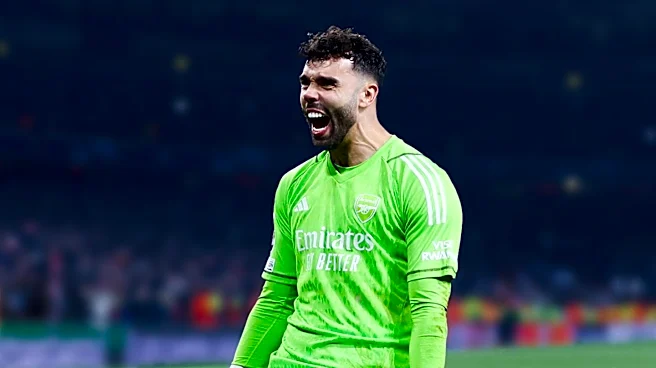
Arsenal goalkeeper David Raya has admitted that his team was caught off guard by Slavia Prague's intensified performance in the second half of their recent Champions League match. Despite securing a 2-1 victory, Raya highlighted the significant shift
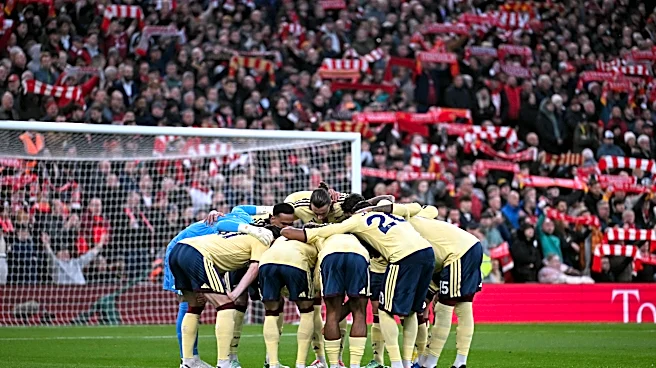
in momentum after halftime. Arsenal had established a comfortable 2-0 lead in the first half, dominating play and creating numerous scoring opportunities. However, Slavia Prague emerged with renewed vigor in the second half, increasing their pressing intensity and making it difficult for Arsenal to maintain control. Raya noted that the Czech hosts 'went up a gear,' forcing Arsenal into more defensive play and creating a challenging environment. He emphasized the need for the team to learn from this experience, particularly in managing games when opponents elevate their performance. The Gunners ultimately held on for the win, but the second-half display revealed areas for improvement in their ability to sustain dominance throughout a full match.
Why It's Important?
This admission from David Raya underscores a critical aspect of top-tier football, particularly in competitions like the Champions League, where maintaining consistent performance across 90 minutes is paramount. For Arsenal, a team with high aspirations, understanding and rectifying these lapses in concentration or tactical adjustments is crucial for their long-term success. The ability of an opponent to 'surprise' a leading team in the second half suggests potential vulnerabilities that stronger adversaries could exploit. This experience serves as a valuable lesson, highlighting the need for greater adaptability and resilience when facing teams that refuse to concede. It impacts team strategy, coaching adjustments, and player mentality, as the squad must learn to anticipate and counter such shifts in momentum to avoid dropping points in future crucial fixtures. For fans and analysts, it provides insight into the team's current state and areas requiring immediate attention.
What's Next?
Following this Champions League fixture, Arsenal will need to analyze their second-half performance against Slavia Prague to address the identified weaknesses. The team's coaching staff will likely focus on tactical adjustments to ensure they can better manage games when opponents increase their intensity. This could involve refining their in-game communication, improving ball retention under pressure, and developing strategies to regain control of the midfield. Players will also be expected to learn from the experience, enhancing their mental fortitude and ability to adapt to changing match dynamics. As Arsenal continues its campaign in both domestic leagues and European competitions, their capacity to maintain consistent performance and avoid being 'surprised' will be a key determinant of their success. Upcoming matches will provide opportunities to demonstrate these improvements, with particular scrutiny on how they handle periods of sustained pressure from opponents.
Beyond the Headlines
The 'surprise' element highlighted by David Raya points to a deeper psychological and tactical challenge in elite football. It's not just about physical conditioning but also about mental preparedness and tactical flexibility. Teams that can consistently adapt to their opponents' mid-game adjustments often emerge victorious in tight contests. This incident could prompt a re-evaluation of Arsenal's in-game management protocols and their ability to react to unforeseen tactical shifts. It also touches upon the broader narrative of resilience in sports – how teams respond when momentum swings against them. For Arsenal, this experience could be a catalyst for developing a more robust and adaptable playing style, moving beyond simply dominating the first half to ensuring control and composure throughout the entire match, a hallmark of championship-winning teams. The incident serves as a reminder that even against seemingly weaker opponents, complacency can be costly.