



What's Happening?
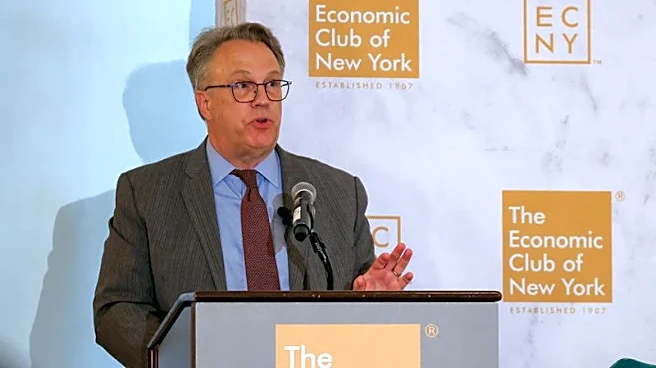
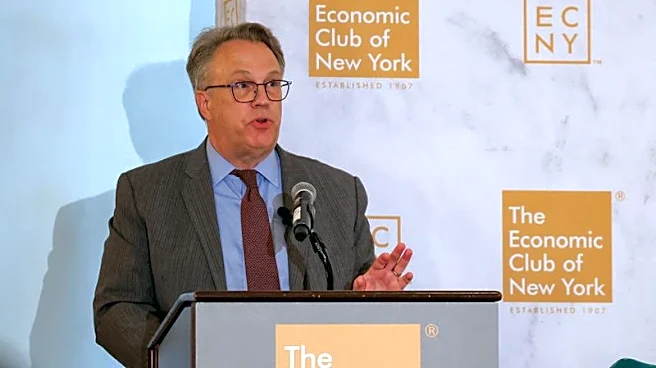
Federal Reserve officials, including New York President John Williams and Governor Christopher Waller, have indicated a strong likelihood of further interest rate hikes to combat persistent inflation. Williams stated that the Fed must take actions to bring
inflation back to its 2% goal in a timely and sustained manner, not ruling out consecutive rate increases if necessary. He expressed confidence that inflation would move closer to the Fed's target by 2027 and potentially hit it the following year. Governor Waller previously suggested the central bank might need to "shock people" with at least a half-percentage-point interest rate hike at the December meeting due to mounting inflationary concerns. Markets, according to the CME FedWatch tool, are pricing in a 95.1% probability of a 25-basis-point hike in December, with a 4.9% chance of a 50 bps hike. St. Louis Fed president Alberto Musalem also echoed the sentiment that several rate hikes might be needed to control inflation.
Why It's Important?
These statements from Federal Reserve officials underscore the central bank's commitment to curbing inflation, even if it means continued aggressive monetary policy. The prospect of further rate hikes directly impacts U.S. industries and economic stakeholders. Businesses may face higher borrowing costs, potentially slowing investment and expansion. Consumers could experience increased costs for loans, mortgages, and credit, affecting spending power. The housing market, in particular, is sensitive to interest rate changes. While the Fed aims to achieve a 'soft landing,' there's a risk that aggressive hikes could tip the economy into a recession. Investors are closely watching these signals, as interest rate decisions significantly influence stock market performance and bond yields. The Fed's actions are designed to cool demand and bring prices down, but the challenge lies in doing so without stifling economic growth too severely. The ongoing debate about the impact of AI on inflation also adds a layer of complexity to the economic outlook.
What's Next?
The Federal Reserve's next policy meeting in December will be a critical juncture, with market participants widely anticipating an interest rate hike. Following this, the central bank will continue to monitor key economic indicators, including inflation rates, employment data, and consumer spending, to guide future decisions. Statements from Fed officials in the coming weeks will provide further clues about the pace and magnitude of potential rate increases in early 2027. Businesses and consumers should prepare for a continued environment of higher interest rates. The Fed's commitment to its 2% inflation target suggests that monetary policy will remain restrictive until there is clear evidence of sustained disinflation. The impact of AI on the economy, while currently not seen as a major contributor to persistent inflation, will also be a factor that Fed officials continue to watch closely as they formulate their economic outlook.
Beyond the Headlines
The Federal Reserve's current stance reflects a broader global challenge of managing inflation in a post-pandemic economy. The emphasis on potentially 'shocking' the market with significant rate hikes highlights the urgency and determination within the central bank to restore price stability. This approach could lead to a re-evaluation of risk appetites across financial markets, as investors adjust to a higher-interest-rate environment. The long-term implications include a potential shift in capital allocation, favoring less speculative investments and those with stronger underlying fundamentals. Furthermore, the Fed's actions could influence international monetary policy, as other central banks may feel pressure to follow suit to maintain currency stability and manage imported inflation. The delicate balance between controlling inflation and avoiding a severe economic downturn will continue to be a central theme in U.S. economic policy for the foreseeable future, shaping everything from corporate strategies to household budgets.