



What's Happening?
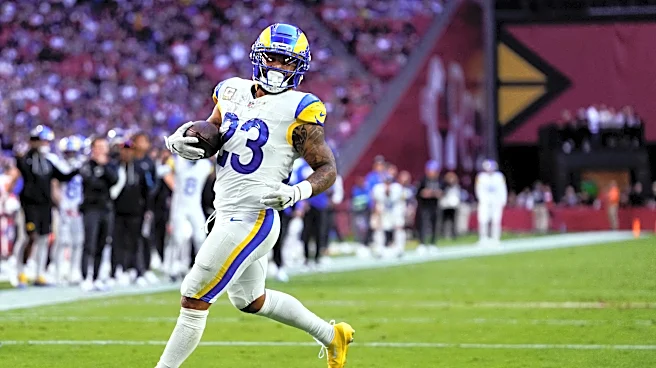
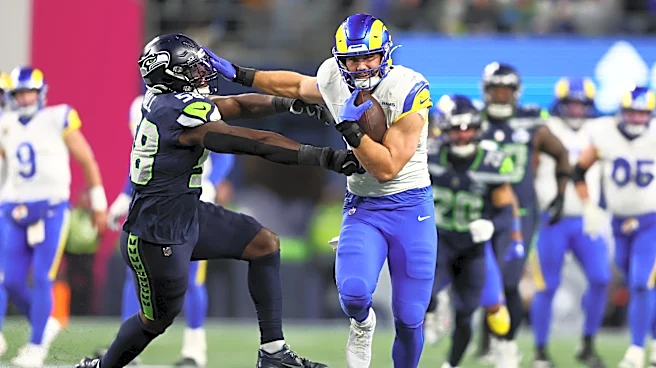
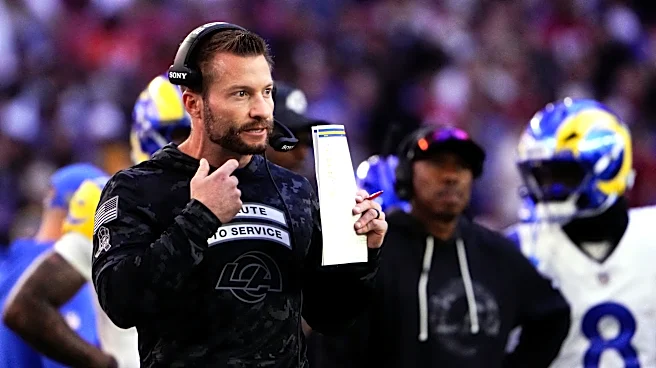
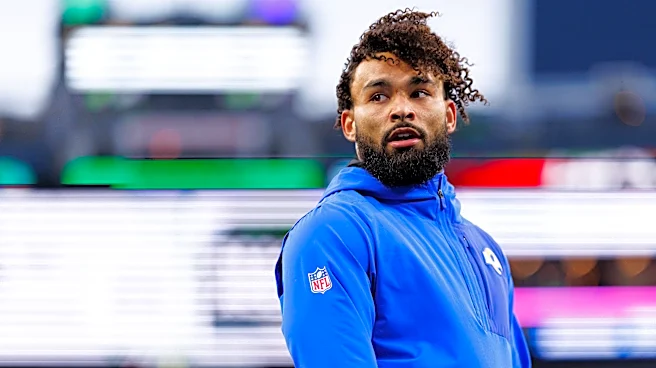
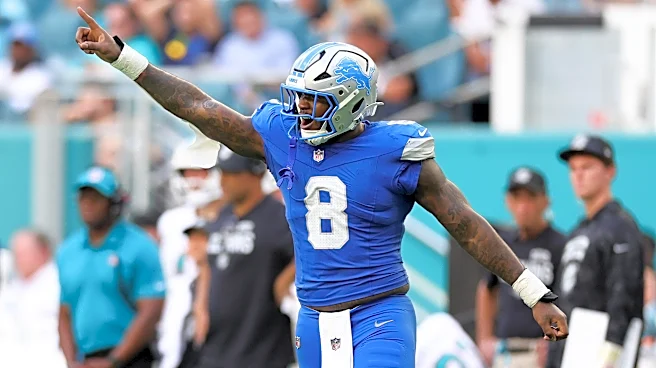
Kyren Williams, a running back for the Los Angeles Rams, has expressed strong approval for sharing carries with teammate Blake Corum. This season, Corum has increasingly taken on a significant role in the backfield, particularly over the last four weeks,
leading to a nearly 50-50 split in carries between the two players. Since Week 7, Corum has accumulated 324 rushing yards on 56 carries, while Williams has gained 223 yards on 59 carries. Williams views this shared workload as highly beneficial for the entire Rams offense, noting that it enhances efficiency, allows the team to stay ahead of the chains, and enables Coach McVay to utilize a wider range of plays. He credits the offensive linemen, tight ends, and receivers for their blocking efforts, which create opportunities for both running backs. The Rams' overall rushing performance ranks them eighth in attempts and yards, and seventh in touchdowns and yards per carry, despite having a traditional pocket passer in Matthew Stafford who does not contribute to the run game.
Why It's Important?
The successful implementation of a shared backfield strategy by the Los Angeles Rams, as embraced by Kyren Williams, highlights a significant trend in modern NFL offensive schemes. This approach not only maximizes the effectiveness of individual running backs by keeping them fresh and healthy throughout the season but also diversifies the team's offensive capabilities. For the Rams, this tandem has proven to be highly efficient, contributing to their strong rushing statistics. This strategy can reduce the physical toll on any single player, potentially extending careers and mitigating injury risks, which is crucial in a physically demanding sport like professional football. Other NFL teams may observe the Rams' success and consider adopting similar dual-back systems, especially if they possess multiple talented running backs. This could lead to a broader shift in how teams manage their backfield personnel, prioritizing sustained performance and player longevity over a single 'workhorse' back.
What's Next?
The Los Angeles Rams are expected to continue utilizing the successful tandem of Kyren Williams and Blake Corum in their backfield. Given Williams' positive reception of the split carries and the team's improved offensive efficiency, there is no indication that the coaching staff will deviate from this strategy. This approach is likely to keep both running backs fresh and healthy as the season progresses, which will be crucial for their performance in potential playoff contention. Other teams in the league will likely monitor the Rams' sustained success with this model, potentially influencing future draft strategies and roster constructions across the NFL. The continued effectiveness of this shared workload could solidify it as a viable long-term strategy for maximizing offensive output and player durability in professional football.
Beyond the Headlines
The Rams' successful deployment of a shared backfield with Kyren Williams and Blake Corum extends beyond mere on-field statistics; it reflects a deeper evolution in sports management and player psychology. In an era where individual accolades often dominate narratives, Williams' embrace of a shared role underscores a team-first mentality that can be critical for sustained success. This approach challenges the traditional 'star player' model, suggesting that collective strength and strategic rotation can yield superior results. Ethically, it promotes player well-being by distributing the physical burden, potentially reducing the long-term health risks associated with high-volume carries. Culturally, it fosters a collaborative environment within the team, where individual ego is subordinated to collective goals. This model could influence how player contracts are structured and how talent is evaluated, moving towards valuing versatile and complementary skill sets over singular dominance, thereby reshaping team dynamics and player development philosophies in professional sports.