






What's Happening?
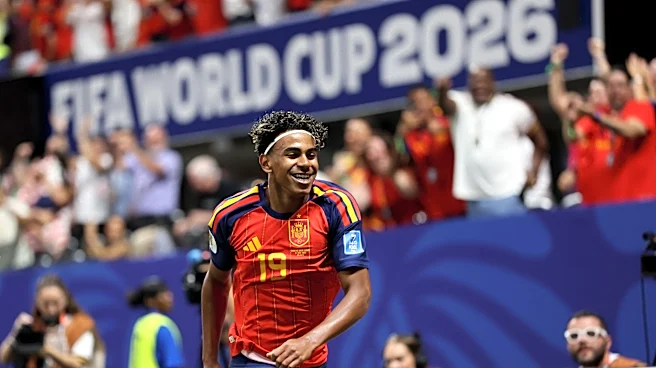
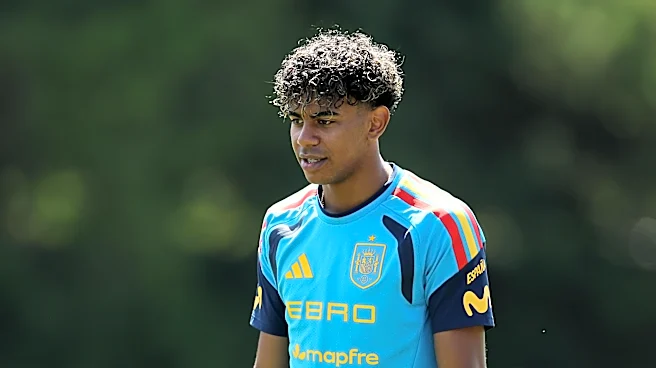
The 2026 FIFA World Cup saw significant developments as Spain showcased a dominant performance against Saudi Arabia, extending their unbeaten streak to 32 games. Spain's young talent, Lamine Yamal, became the eighth-youngest player to score in a World Cup,
surpassing Lionel Messi's record. Meanwhile, Belgium faced challenges, failing to score against Iran despite numerous attempts, marking 406 minutes without a goal in the tournament. Iran, fielding the oldest starting XI since 1966, managed to secure a draw. Cape Verde made history by scoring its first-ever World Cup goal against Uruguay, although they eventually lost the match. Egypt also celebrated its first World Cup victory, defeating New Zealand 3-1, with Mo Salah becoming Egypt's all-time top scorer in World Cup history.
Why It's Important?
These matches highlight the dynamic nature of the World Cup, showcasing emerging talents and unexpected outcomes. Spain's continued success underscores their position as a formidable contender, while Belgium's struggles raise questions about their offensive capabilities. Iran's ability to hold Belgium to a draw demonstrates the competitive spirit of underdog teams. Cape Verde's historic goal and Egypt's first win reflect the growing diversity and competitiveness in international soccer. These developments could influence team strategies and fan expectations as the tournament progresses.
What's Next?
As the World Cup continues, teams will need to adapt their strategies to secure advancement. Spain will aim to maintain their momentum, while Belgium must address their scoring issues to avoid early elimination. Iran will look to capitalize on their defensive strengths in upcoming matches. Cape Verde and Egypt will seek to build on their recent successes to enhance their standings. The outcomes of these matches will shape the tournament's narrative and impact the future of international soccer.