





What's Happening?
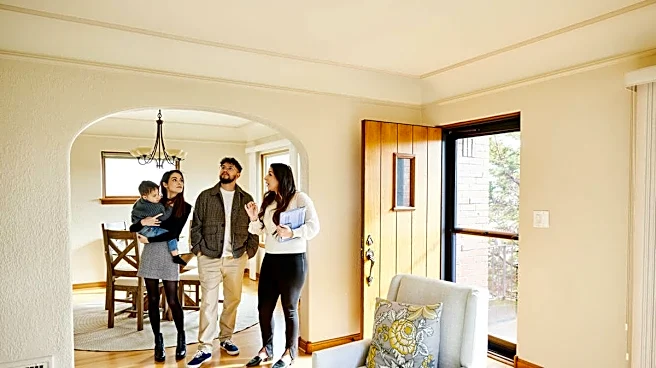
The National Association of REALTORS® (NAR) has reported a 3.8% increase in pending home sales for May, marking a 4.8% rise year-over-year. This growth is attributed to a late spring buyer rush, despite mortgage rates remaining above 6%. NAR Chief Economist
Dr. Lawrence Yun noted that the Northeast region, which has experienced faster home price growth but slower sales, is now seeing more buyer contract signings. The report highlights a need for increased housing supply to moderate price growth. Falling oil prices are expected to help lower mortgage rates, although declines may be modest due to federal borrowing and strong AI investment spending by tech companies. The report also detailed regional increases, with the Midwest and Northeast showing significant month-over-month gains.
Why It's Important?
The increase in pending home sales indicates a strong demand in the housing market, even with high mortgage rates. This trend suggests that consumers are adapting to the current economic conditions, which could stabilize the housing market. The report's findings are crucial for real estate professionals, policymakers, and economists as they provide insights into consumer behavior and market trends. The potential for lower mortgage rates due to falling oil prices could further stimulate the market, although federal borrowing and tech investments may limit these declines. The regional data also highlights areas of growth, which could guide future housing policies and investment decisions.
What's Next?
The housing market may continue to see fluctuations as mortgage rates and economic conditions evolve. The NAR report suggests that increased housing supply is necessary to moderate price growth, which could lead to policy discussions on housing development and zoning laws. Additionally, the impact of federal borrowing and tech investments on mortgage rates will be closely monitored. Real estate professionals and policymakers will likely focus on strategies to balance supply and demand, ensuring sustainable growth in the housing market.