






What's Happening?
The Portland Wheelers recently hosted their inaugural 'Biking is for EveryBODY' festival in Portland's Back Cove, an event dedicated to making cycling accessible to individuals of all physical abilities. The festival featured a variety of adaptive activities,
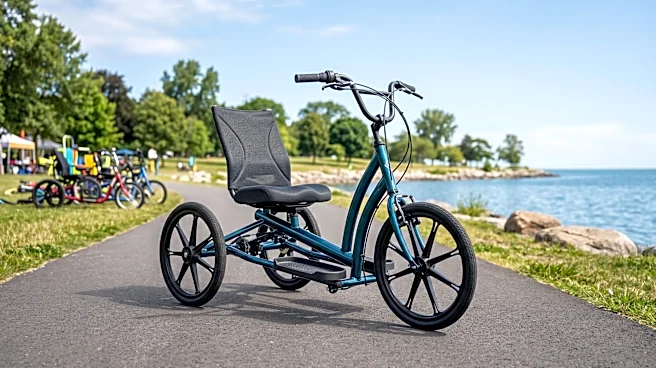
including workshops and a parade led by two-time Paralympian and world champion cyclist Clara Brown. The event showcased different types of adaptive bikes, such as electric bikes, recumbent tandems, and elliptical-style trikes, demonstrating that bike technology can accommodate diverse needs. Brenda Santoro, 65, who has multiple sclerosis, and Jennette Morse, 76, also living with MS, highlighted how the Portland Wheelers enable them to continue biking and engage socially. Pete Ryan, Executive Director of Portland Wheelers, emphasized the importance of showing people that a suitable bike is available for whatever their body needs, noting the advancements in bike technology. The event was made free to attendees through a partnership with Martin's Point Health Care, and approximately 40 volunteers assisted throughout the day.
Why It's Important?
This event is important because it addresses a significant gap in recreational opportunities for individuals with physical disabilities, promoting inclusivity and challenging conventional perceptions of cycling. By showcasing a wide array of adaptive cycling equipment and techniques, the 'Biking is for EveryBODY' festival highlights how technology and community support can overcome physical barriers. For participants like Brenda Santoro and Jennette Morse, who face the isolating effects of conditions like multiple sclerosis, adaptive cycling offers not only physical activity but also crucial social engagement and a sense of freedom. The involvement of a prominent figure like Paralympian Clara Brown further elevates the event's profile, inspiring others and demonstrating the potential for high-level athletic achievement regardless of physical challenges. This initiative also underscores the value of community partnerships, as the collaboration with Martin's Point Health Care made the event accessible to all, removing financial barriers to participation.
What's Next?
The Portland Wheelers plan to grow the 'Biking is for EveryBODY' event in the future, aiming to expand its reach and impact. Executive Director Pete Ryan expressed eagerness to see the event develop, indicating a commitment to continuing and potentially enlarging this initiative. The success of the inaugural festival, marked by strong volunteer participation and positive feedback from attendees, suggests a solid foundation for future growth. Continued partnerships with organizations like Martin's Point Health Care will likely be crucial for sustaining the event's free access and expanding its offerings. The event's focus on adaptive cycling technology also implies ongoing efforts to integrate new advancements and equipment, ensuring that the festival remains at the forefront of accessible cycling. The positive experiences shared by participants are expected to encourage more individuals with disabilities to explore adaptive cycling, potentially leading to increased demand for such programs and equipment.
Beyond the Headlines
Beyond the immediate celebration of adaptive cycling, this event touches upon broader societal implications regarding accessibility, inclusion, and the evolving definition of sport. It challenges the notion that certain activities are exclusive to able-bodied individuals, advocating for a more inclusive public space and recreational landscape. The 'Biking is for EveryBODY' festival serves as a powerful example of how community-led initiatives can foster a sense of belonging and empowerment among marginalized groups. Ethically, it highlights the responsibility of communities to provide equitable opportunities for all citizens to participate in healthy and enjoyable activities. Culturally, it contributes to a shift in perception, moving away from pity or charity towards recognition of capability and the right to participate. The long-term impact could include increased investment in adaptive sports infrastructure, greater awareness among policymakers about the needs of individuals with disabilities, and a more widespread adoption of inclusive practices in recreational planning across the U.S.