




What's Happening?
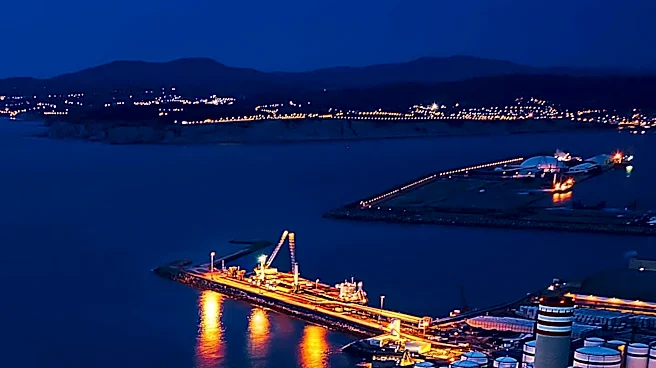
Venture Global's Plaquemines Phase 2 liquefied natural gas (LNG) export terminal is on track to begin deliveries of contracted LNG cargoes by the end of the second quarter of 2027. The facility, located in Louisiana, will add 10 million tonnes per year
(tpy) of production capacity, bringing its total capacity to 27.2 million tpy. Major U.S. energy companies Chevron and ExxonMobil are foundational customers for this phase. Venture Global has informed these buyers that deliveries remain on schedule. The company previously faced disputes with foundational customers of its Calcasieu Pass LNG plant, including Italy's Edison, Spain's Repsol, China's Unipec, Shell, BP, and Poland's Orlen, over its decision to sell cargoes on the spot market during the plant's commissioning phase. While settlements have been reached with some and arbitration cases concluded, Venture Global is still in arbitration with Orlen. The company plans a third phase for Plaquemines LNG, which would further boost capacity to 45 million tpy with an estimated investment of $18 billion.
Why It's Important?
The timely progression of Venture Global's Plaquemines Phase 2 is significant for the U.S. energy sector and global LNG markets. As the U.S. continues to expand its role as a major LNG exporter, new capacity additions like Plaquemines contribute to global energy security and diversification of supply, particularly for European and Asian markets seeking alternatives to Russian gas. For U.S. supermajors like Chevron and ExxonMobil, securing long-term LNG supplies from domestic projects enhances their portfolios and strategic positioning in the global energy landscape. The expansion also supports job creation and economic activity in Louisiana. The previous disputes with Calcasieu Pass customers highlight the complexities and contractual risks in large-scale energy projects, underscoring the importance of clear contractual terms and reliable project execution. The successful delivery of Plaquemines Phase 2 will help reinforce Venture Global's reputation as a key player in the U.S. LNG industry, second only to Cheniere Energy.
What's Next?
Venture Global will continue construction and commissioning activities for Plaquemines Phase 2 to ensure it meets the targeted delivery schedule by the end of Q2 2027. The company will also likely focus on resolving its remaining arbitration case with Poland's Orlen, which could have implications for future contractual agreements and customer relations. Looking further ahead, Venture Global's plans for a third phase at Plaquemines, aiming for a total capacity of 45 million tpy and an $18 billion investment, indicate a continued aggressive expansion strategy. This will involve securing additional financing, regulatory approvals, and long-term contracts with new customers. The success of these future phases will depend on market demand for LNG, global energy policies, and the company's ability to manage large-scale capital projects efficiently. The ongoing expansion of U.S. LNG export capacity will continue to shape global energy trade flows and pricing dynamics.
Beyond the Headlines
The rapid expansion of U.S. LNG export capacity, exemplified by Venture Global's projects, reflects a broader strategic shift in global energy markets. The U.S. has leveraged its abundant natural gas resources to become a dominant force in LNG, influencing geopolitical dynamics and energy security worldwide. This growth also raises environmental considerations, as the production and liquefaction of natural gas contribute to greenhouse gas emissions, prompting ongoing debates about the role of natural gas in the energy transition. The contractual disputes faced by Venture Global underscore the intricate legal and commercial frameworks governing international energy trade, where the balance between supplier flexibility and buyer security is constantly negotiated. The company's meteoric rise since its founding in 2013 highlights the entrepreneurial spirit and significant capital investment driving the U.S. energy sector, positioning it as a critical player in meeting global energy demands while navigating complex market and regulatory challenges.