






What's Happening?
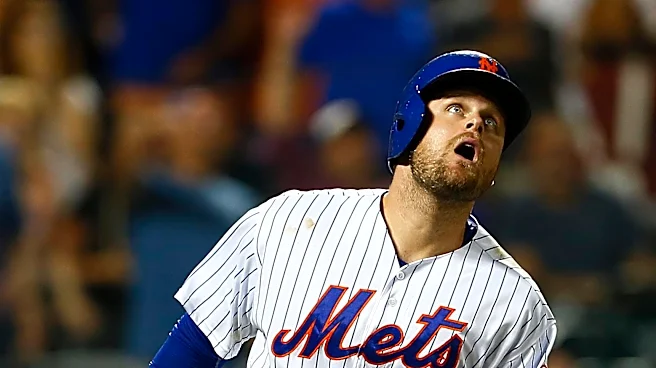
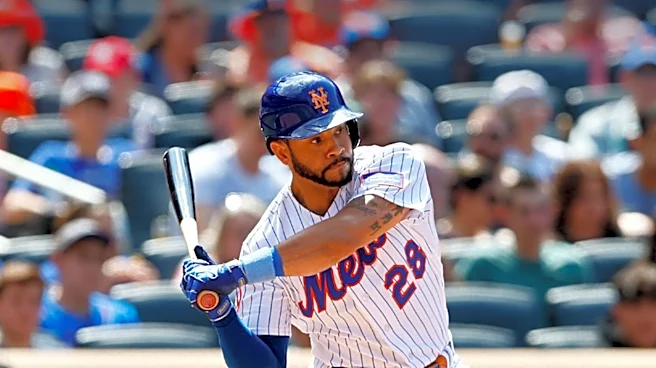
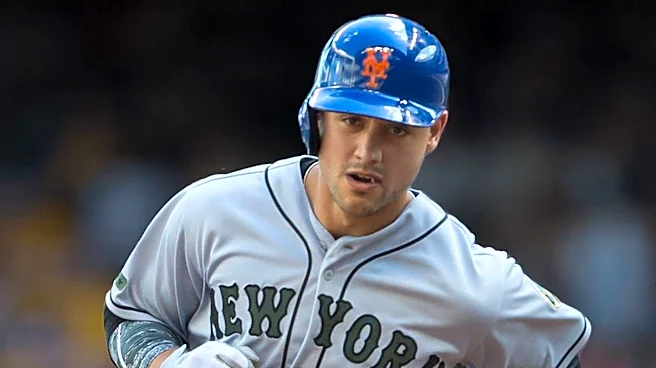
The New York Mets have concluded the first half of their season with a disappointing 40-57 record, marking their worst performance at this stage since 1995. The team has faced significant challenges, including a 16th loss in 22 games and a series of errors,
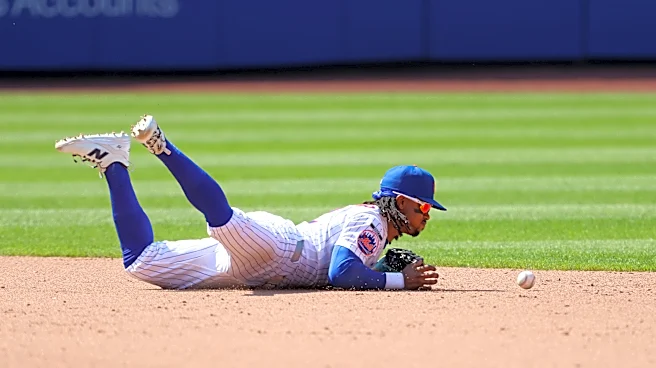
such as a critical mistake by shortstop Francisco Lindor that contributed to a recent loss against Boston. The Mets' pitching staff has struggled, with a team ERA of 4.27, higher than last year's 4.03. Key players have been sidelined due to injuries, and the team has not been able to field its optimal lineup consistently. Interim manager Andy Green, who took over in late June, acknowledges the need for improvement as the team is 12 games out of the last NL wild card spot.
Why It's Important?
The Mets' poor performance has significant implications for the team's future and its fan base. With high expectations and a substantial payroll, the team's struggles highlight issues in player performance and management decisions. The inability to compete effectively could lead to changes in strategy, player trades, or management shifts. The team's performance also affects its financial prospects, as success on the field is closely tied to revenue from ticket sales, merchandise, and broadcasting rights. The Mets' situation serves as a cautionary tale for other teams about the risks of high payrolls without corresponding on-field success.
What's Next?
As the Mets enter the second half of the season, they face a challenging schedule with 19 consecutive games against teams currently in playoff positions. The team will need to improve its performance significantly to have any chance of reaching the postseason. Management may consider trades or other roster changes to address weaknesses, particularly in pitching and run production. The team's ability to recover and perform better in the second half will be crucial for maintaining fan support and setting a positive direction for the future.